No products in the cart.

IBO Mar 18–22 2026 Industry Event Overview
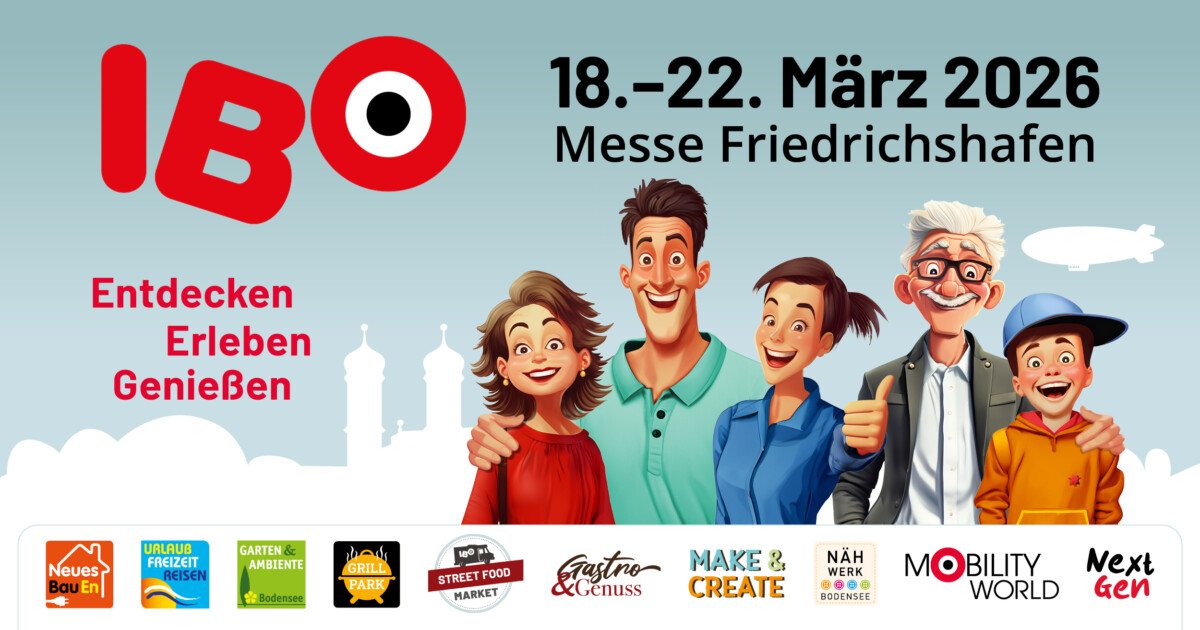
IBO Mar 18–22 2026 Industry Event Overview: A Cross-Sector Marketplace in Southern Germany
The IBO trade fair will return to MESSE FRIEDRICHSHAFEN from March 18 to March 22, 2026, reinforcing its position as one of southern Germany’s most comprehensive consumer-oriented industry events. Held at Neue Messe 1, 88046 Friedrichshafen, in Baden-Württemberg, the five-day exhibition brings together businesses, regional institutions, and consumers across a wide spectrum of sectors.
Hosted at the Friedrichshafen exhibition grounds near Lake Constance, the event benefits from its proximity to Switzerland and Austria. This strategic location strengthens its cross-border appeal and positions IBO as a regional marketplace serving the broader DACH economic area. Official information is available through the organizer and venue platforms, including messe-fn.de and ibo-messe.de.
A Multi-Industry Consumer Trade Fair Model
Blending B2C Retail and Business Networking
The IBO Mar 18–22 2026 Industry Event Overview highlights a format that differs from narrowly focused B2B expos. IBO operates as a multi-sector public trade fair, combining direct-to-consumer sales opportunities with brand visibility, regional promotion, and professional networking.

This hybrid model reflects a broader shift in Germany’s exhibition landscape, where consumer trade fairs increasingly function as both retail platforms and economic showcases. Exhibitors range from small craft businesses and regional producers to national manufacturers and service providers.
Core Industry Segments
IBO’s diversified industry coverage typically includes:
– Home and living, interior design, and furnishings
– Construction, renovation, and energy efficiency solutions
– Lifestyle products, fashion, and accessories
– Health, wellness, and fitness
– Mobility, leisure, and travel
– Regional food and beverage producers
This cross-sector approach mirrors changing consumer expectations. Visitors increasingly seek integrated solutions—such as combining home modernization with energy consulting or pairing lifestyle products with wellness services—rather than isolated product categories.
Strategic Importance of Friedrichshafen and the Lake Constance Region
Friedrichshafen, located in Baden-Württemberg, is known for its strong industrial base, including aerospace, automotive supply, and advanced manufacturing. By hosting IBO at MESSE FRIEDRICHSHAFEN, the event bridges consumer markets with a region recognized for technological innovation and export strength.
The venue itself is one of southern Germany’s established exhibition centers, regularly hosting international events in aviation, outdoor recreation, and mobility. Its infrastructure and tri-national accessibility make it a logical setting for a trade fair that draws attendees from Germany, Austria, and Switzerland.
For exhibitors, the Lake Constance region offers access to relatively affluent households and a dense network of small and medium-sized enterprises (SMEs). For local authorities and chambers of commerce, IBO contributes to regional economic circulation by promoting local producers and stimulating visitor spending.
Market Context: Germany’s Evolving Consumer Trade Fair Landscape
From Transactional Sales to Experiential Engagement
Germany remains Europe’s largest trade fair market, with a longstanding tradition of both B2B and B2C exhibitions. However, consumer fairs have had to adapt to structural shifts driven by e-commerce expansion, digital marketing, and supply chain realignment.
Events like IBO increasingly emphasize experiential engagement. Live demonstrations, expert consultations, and interactive exhibits are now central components. In sectors such as construction, renewable energy, and smart home systems, purchasing decisions often require in-person explanation and trust-building.
This is particularly relevant in areas including:
– Residential solar and energy storage systems
– Smart home and building automation technologies
– Sustainable construction materials
– Health and preventive wellness technologies
Germany’s climate and energy transition policies continue to drive demand for energy-efficient housing and modernization. Trade fairs provide a platform for consumers to compare solutions, evaluate providers, and gather information before committing to high-investment projects.
The Role of SMEs
Small and medium-sized enterprises form the backbone of the German economy, especially in Baden-Württemberg. For these companies, IBO offers several strategic advantages:
– Direct consumer access without intermediary retail channels
– Brand visibility in a competitive regional market
– Real-time product testing and customer feedback
– Cross-industry networking opportunities
In industries with long purchasing cycles—such as renovation and home improvement—IBO supports both immediate on-site sales and longer-term lead generation.
Attendee Profile and Consumer Demand Trends
IBO primarily attracts a regional audience from southern Germany and neighboring countries. Typical visitors include:
– Homeowners and prospective property buyers
– Families exploring lifestyle and leisure products
– Renovation planners and energy-conscious consumers
– Health- and wellness-oriented individuals
Demographic and economic factors are shaping demand. Germany’s aging population is increasing interest in accessibility renovations and preventative health products. At the same time, rising awareness of sustainability is influencing purchasing decisions related to energy efficiency and environmentally friendly materials.
In a climate marked by inflationary pressure and cautious consumer spending, trade fairs also function as comparison platforms. Visitors can evaluate multiple suppliers in one location, negotiate pricing, and assess quality directly. This dynamic supports informed decision-making while allowing companies to differentiate through consultation and service.
Cross-Industry Collaboration and Integrated Solutions
Because IBO spans multiple sectors, it fosters collaboration across industries. A renovation contractor, for example, may connect with energy consultants, interior designers, or financing providers. This ecosystem-based model reflects broader market shifts toward bundled services and integrated home solutions.
Such cross-industry interaction is increasingly important as consumers seek comprehensive packages rather than isolated products. Trade fairs provide a physical environment where these partnerships can be initiated and developed.
Economic and Regional Impact
The economic impact of IBO extends beyond exhibitor transactions. Large-scale exhibitions contribute to:
– Hotel occupancy and hospitality revenue
– Local transport and logistics demand
– Temporary employment in event services
– Broader regional brand visibility
Friedrichshafen’s recurring role as host city for major exhibitions strengthens its profile as a trade fair hub in Baden-Württemberg. For MESSE FRIEDRICHSHAFEN, maintaining a diversified event portfolio enhances year-round venue utilization and regional economic resilience.
Industry Outlook for 2026
As IBO approaches its March 18–22, 2026 edition, it operates within a complex economic and regulatory environment. Key factors influencing exhibitor strategy include ongoing digital transformation in retail, sustainability regulations, European supply chain restructuring, and continued consumer sensitivity to energy and living costs.
Trade fairs that successfully combine physical interaction with digital follow-up strategies are likely to maintain their relevance. While online channels dominate transactional retail, sectors requiring technical explanation, trust, and customization continue to benefit from in-person engagement.
Within this context, the IBO Mar 18–22 2026 Industry Event Overview underscores the enduring role of diversified consumer exhibitions in Germany’s trade fair ecosystem. Positioned at the intersection of lifestyle markets, regional commerce, and sustainability-driven innovation, IBO remains a significant platform for SMEs, consumers, and the broader Lake Constance economy.

Related Posts