No products in the cart.

Solar Energy and Technology Fair April 2026
Solar Energy and Technology Fair April 2026 to Convene Global Renewable Energy Stakeholders in Istanbul
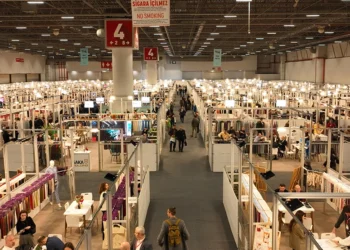
The Solar Energy and Technology Fair April 2026 is set to take place from April 8 to April 10, 2026, at the İSTANBUL EXPO CENTER in Yeşilköy, Atatürk Cd. No: 5/5, Bakırköy, İstanbul, Türkiye. Organized as one of the region’s prominent renewable energy trade events, the fair will bring together manufacturers, technology providers, investors, policymakers, and project developers operating across the solar energy value chain.
Hosted at the İSTANBUL EXPO CENTER (https://www.istanbulexpo.com.tr/), the event—also known internationally through its official website http://solarexistanbul.com/en/—serves as a strategic meeting point between European, Middle Eastern, Asian, and North African solar markets. Its location in Istanbul, a city that bridges continents, reinforces its positioning as a regional hub for renewable energy dialogue and commerce.
Event Overview and Strategic Focus
The Solar Energy and Technology Fair April 2026 will showcase advancements in photovoltaic (PV) panels, inverters, energy storage systems, smart grid technologies, mounting systems, tracking solutions, and integrated solar applications. In addition to hardware manufacturers, the exhibition is expected to include engineering, procurement, and construction (EPC) companies, financial institutions, software developers, and clean energy consultants.

Who Attends
The fair typically attracts:
– Solar panel and component manufacturers
– Energy storage and battery system providers
– EPC contractors and project developers
– Utility representatives and independent power producers
– Government agencies and regulatory authorities
– Investors, venture capital firms, and financial institutions
– Distributors and wholesale buyers
By convening these stakeholders under one roof, the event creates a platform for supply chain negotiations, technology launches, partnership discussions, and policy engagement.
Why It Matters
Türkiye has emerged as one of the fastest-growing solar markets in the region. The country’s strategic energy diversification policies, rising electricity demand, and commitments to expand renewable capacity have positioned solar power as a central pillar of its energy transition. The Solar Energy and Technology Fair April 2026 reflects this momentum, providing insight into both domestic market development and broader international investment flows.
Istanbul as a Renewable Energy Hub
The selection of the İSTANBUL EXPO CENTER as the venue underscores the fair’s international orientation. Located in Bakırköy, with direct access to transportation infrastructure and close proximity to major business districts, the venue supports large-scale trade exhibitions with global participation.
Istanbul’s geographic position between Europe and Asia enhances the fair’s relevance. Türkiye acts as a bridge market, connecting European Union renewable energy standards and supply chains with high-growth markets in the Middle East, Central Asia, and North Africa. As a result, the Solar Energy and Technology Fair April 2026 is not only a domestic industry gathering but also a cross-border business platform.
Industry Context: Solar Market Expansion in 2026
The global solar energy sector continues to expand rapidly, driven by declining technology costs, policy incentives, and corporate decarbonization goals. Utility-scale solar projects, distributed generation systems, and hybrid solar-plus-storage installations are increasing across both developed and emerging markets.
Declining Costs and Technology Innovation
Advancements in high-efficiency photovoltaic modules, bifacial panels, and next-generation inverters are reshaping competitive dynamics. Battery storage integration has also become a central theme, enabling grid stability and expanding the feasibility of solar deployment in regions with variable load profiles.
Events such as the Solar Energy and Technology Fair April 2026 provide a snapshot of these innovations. Exhibitors typically present new module designs, digital monitoring platforms, and energy management software, reflecting the sector’s transition toward intelligent and integrated systems.
Policy and Energy Security Drivers
Energy security concerns and climate targets continue to influence renewable energy investment. Governments are seeking to reduce dependency on imported fossil fuels while meeting emissions reduction commitments. Türkiye’s renewable expansion strategy aligns with these global trends, contributing to heightened investor interest in the local solar market.
The fair is expected to highlight regulatory frameworks, incentive schemes, and financing mechanisms that shape project development in the region. Industry stakeholders often use such events to assess policy stability and gauge long-term market potential.
Business and Investment Impact
Trade fairs play a measurable role in shaping supply chains and commercial partnerships. For manufacturers, participation offers access to distributors and bulk buyers. For project developers and EPC firms, the event creates opportunities to evaluate new technologies and negotiate procurement agreements.
Supply Chain Integration
The solar industry relies on a complex global supply chain, spanning raw materials, module assembly, electronics manufacturing, and installation services. Regional trade events help localize parts of that chain, encouraging domestic production and technology transfer.
Türkiye has made efforts to strengthen local manufacturing capacity in solar modules and related components. The Solar Energy and Technology Fair April 2026 provides a forum to assess the competitiveness of domestic producers and their integration into global markets.
Financial and Institutional Participation
Renewable energy financing remains a central issue in 2026. Institutional investors and banks are increasingly allocating capital to sustainable infrastructure projects. The fair’s environment facilitates direct engagement between project sponsors and capital providers, accelerating deal-making processes.
Green bonds, sustainability-linked loans, and public-private partnership models are expected to feature in discussions among attendees, reflecting the evolving financial architecture of the energy transition.
Technology Trends Expected at the Fair
Several key technology themes are likely to shape the exhibition floor:
– Hybrid solar and storage systems for grid resilience
– Digital monitoring and predictive maintenance platforms
– High-efficiency and lightweight module designs
– Agrivoltaics and dual-use land applications
– Floating solar systems for reservoirs and industrial sites
These innovations reflect a broader industry shift toward maximizing land use efficiency, improving output reliability, and integrating renewable generation with digital infrastructure.
Regional and International Outlook
While centered in Istanbul, the Solar Energy and Technology Fair April 2026 has implications beyond Türkiye. The broader Eurasian region is witnessing rising renewable deployment, driven by industrial growth and decarbonization strategies.
Cross-border energy cooperation, interconnection projects, and multinational supply agreements are increasingly common. As a result, the fair serves as a networking and information exchange platform for companies targeting expansion into neighboring markets.
Conclusion
Scheduled for April 8–10, 2026, at the İSTANBUL EXPO CENTER in İstanbul, Türkiye, the Solar Energy and Technology Fair April 2026 stands as a significant industry event within the regional renewable energy calendar. By gathering manufacturers, policymakers, investors, and technology innovators, it reflects the accelerating transformation of the global solar sector.
Beyond its exhibition function, the event offers insight into market dynamics, regulatory evolution, and technological advancement shaping solar energy in 2026. As renewable energy continues to gain strategic importance worldwide, industry gatherings such as this one provide a measurable indicator of investment trends, supply chain shifts, and the long-term trajectory of the clean energy economy.

Related Posts