No products in the cart.

RSAC Conference 2026 Cybersecurity Outlook
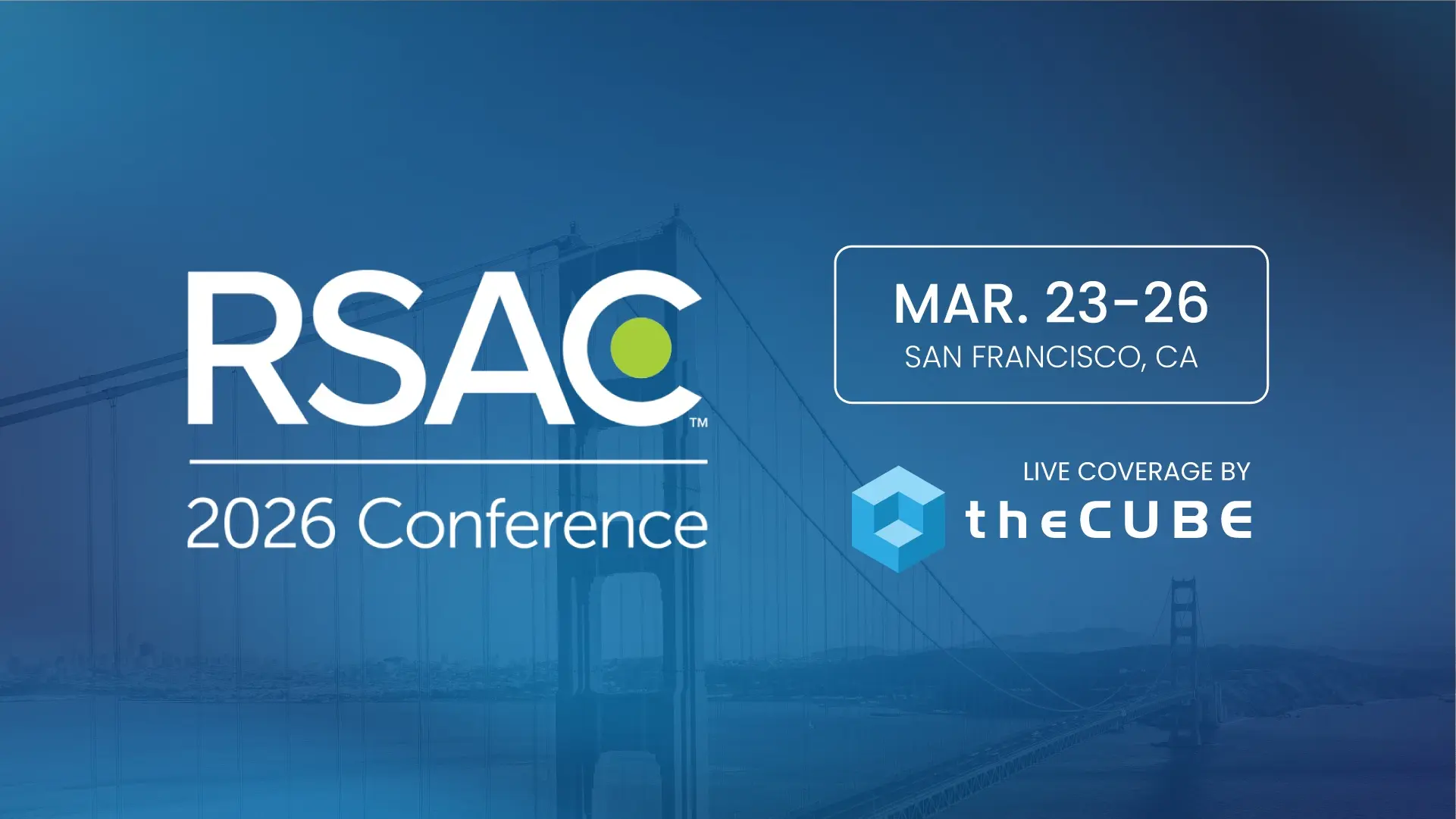

RSAC Conference 2026 Cybersecurity Outlook: Industry Converges in San Francisco Amid Escalating Global Threats
The RSAC Conference 2026 Cybersecurity Outlook will take place from March 23 to March 26, 2026, at the Moscone Center, 747 Howard St, San Francisco, California. Hosted annually in the United States, the RSAC Conference is widely regarded as one of the most influential cybersecurity events globally, drawing security professionals, technology vendors, policymakers, and enterprise leaders to assess emerging risks and strategic priorities.
Held at the Moscone Center in downtown San Francisco, the four-day event will again serve as a focal point for the cybersecurity industry’s response to an increasingly complex threat landscape. Official details and updates are available through the event website at https://www.rsaconference.com/usa and venue information at https://www.moscone.com/.
A Global Forum for Cybersecurity Leadership
The RSAC Conference functions as a cross-sector platform where cybersecurity practitioners, chief information security officers (CISOs), government agencies, academic researchers, and technology providers gather to discuss threat intelligence, product innovation, and regulatory developments. The event’s scale and diversity of participation reflect the growing centrality of cybersecurity to global economic stability and national security.

Attendees typically include representatives from financial services, healthcare, manufacturing, retail, energy, and public sector organizations—industries that continue to face escalating cyber risks. Major technology firms, cybersecurity startups, managed security service providers, and cloud infrastructure companies also maintain a strong presence through exhibition halls and technical briefings.
The 2026 edition is expected to emphasize strategic resilience, supply chain security, identity management, cloud-native defense, and artificial intelligence-driven threat detection.
Industry Context: Rising Threat Complexity and Regulatory Pressure
The RSAC Conference 2026 Cybersecurity Outlook unfolds against a backdrop of accelerating digital transformation and increasingly sophisticated cyberattacks. Ransomware groups, state-sponsored actors, and organized cybercrime networks continue to exploit vulnerabilities in cloud environments, critical infrastructure, and third-party supply chains.
The global cybersecurity market has expanded rapidly in response. Enterprises are allocating larger portions of IT budgets to risk mitigation, zero-trust architectures, endpoint detection and response (EDR), security information and event management (SIEM), and extended detection and response (XDR) platforms. The integration of artificial intelligence and machine learning into security operations centers (SOCs) has become a defining market trend.
Simultaneously, regulatory frameworks are tightening worldwide. Data protection laws, critical infrastructure mandates, and cross-border data governance standards are driving demand for compliance-focused cybersecurity solutions. The United States, European Union, and Asia-Pacific markets are each introducing or refining cyber resilience requirements, further expanding the addressable market for security vendors.
Key Themes Expected at RSAC Conference 2026
Artificial Intelligence in Security Operations
Artificial intelligence is expected to dominate discussions at RSAC 2026. Security vendors are increasingly embedding AI into threat detection, behavioral analytics, and automated response systems. However, adversaries are also leveraging generative AI and automation to scale phishing campaigns, malware development, and reconnaissance.
The conference will likely explore both the opportunities and risks associated with AI in cybersecurity, including governance frameworks and adversarial AI defense.
Zero Trust and Identity-Centric Security
As organizations migrate workloads to hybrid and multi-cloud environments, identity has emerged as the new perimeter. Zero trust architectures—centered on continuous verification and least-privilege access—remain a strategic priority.
Identity and access management (IAM), privileged access management (PAM), and multi-factor authentication solutions are anticipated to feature prominently among exhibitors. Discussions will likely address how identity-driven frameworks can reduce lateral movement in breach scenarios.
Critical Infrastructure and Supply Chain Protection
Recent high-profile attacks on infrastructure and software supply chains have elevated resilience planning. At RSAC Conference 2026, government agencies and private sector operators are expected to examine collaborative threat intelligence sharing, third-party risk management, and software bill of materials (SBOM) strategies.
The increasing digitization of utilities, transportation, and manufacturing systems has expanded the attack surface, intensifying the need for operational technology (OT) security solutions.
Exhibitors and Innovation Ecosystem
The RSAC Conference exhibition floor at the Moscone Center typically features a broad spectrum of cybersecurity vendors—from established multinational firms to venture-backed startups introducing emerging technologies. Categories commonly represented include:
– Endpoint security and EDR platforms
– Cloud security and workload protection
– Identity and access management
– Encryption and data protection
– Managed detection and response (MDR) services
– Threat intelligence platforms
– Application security and DevSecOps tools
For startups, RSAC provides exposure to enterprise buyers and investors. For established vendors, the conference serves as a launch platform for product announcements and strategic partnerships.
The event also plays a role in shaping venture capital flows into the cybersecurity sector. Investor participation underscores the industry’s continued growth trajectory and the demand for innovation in areas such as quantum-resistant cryptography and secure software development.
Economic Impact on San Francisco
The RSAC Conference generates significant economic activity for San Francisco. With thousands of professionals traveling to California for the four-day event, local hotels, restaurants, and transportation services experience increased demand.
The Moscone Center, one of the city’s premier convention venues, regularly hosts large-scale technology and industry events. RSAC’s return each year reinforces San Francisco’s role as a global technology hub and a central node in cybersecurity dialogue.
Beyond immediate tourism revenue, the conference contributes to long-term economic value by facilitating partnerships, investment deals, and cross-border collaboration agreements initiated during the event.
Strategic Importance for Business and Government
The RSAC Conference 2026 Cybersecurity Outlook is more than a trade show; it is a strategic barometer for the cybersecurity sector. Enterprises use insights gained at RSAC to refine security roadmaps, evaluate vendor solutions, and benchmark defensive maturity against industry peers.
Government representatives leverage the event to communicate policy priorities and coordinate public-private initiatives. In an era where cyber incidents can disrupt financial markets, healthcare systems, and national infrastructure, the intersection of policy and technology is increasingly critical.
For corporate boards and executive leadership teams, cybersecurity has evolved from a technical issue to a core governance concern. Discussions at RSAC frequently influence budget allocations, risk management frameworks, and digital transformation strategies across industries.
Outlook for 2026 and Beyond
As organizations deepen reliance on cloud computing, connected devices, and AI-driven systems, the cybersecurity market is positioned for sustained expansion. However, growth is accompanied by mounting complexity and adversarial sophistication.
The RSAC Conference 2026 at the Moscone Center in San Francisco will serve as a focal point for assessing how the industry adapts to these pressures. By convening security leaders from across sectors and geographies, the event provides a comprehensive view of where cybersecurity stands—and where it is headed in the years ahead.
In a digital economy defined by interconnected risk, the discussions and innovations emerging from RSAC 2026 will likely shape both corporate security strategies and global cyber resilience frameworks.