No products in the cart.

Public Lands Alliance 2026 Park Retail Event
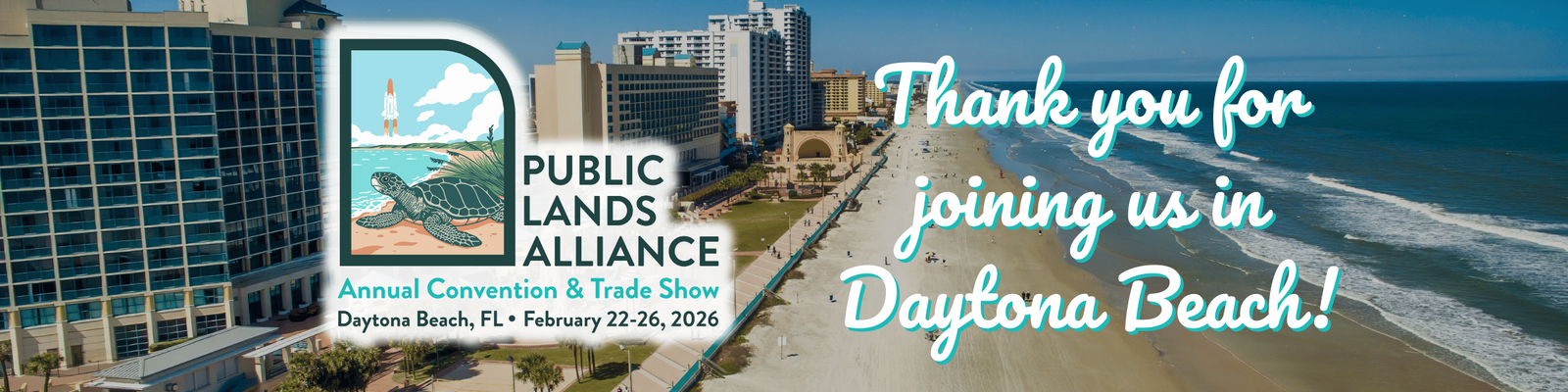

Public Lands Alliance 2026 Park Retail Event Set for Daytona Beach
The Public Lands Alliance 2026 Park Retail Event will convene February 22–26, 2026, at the Ocean Center, 101 N Atlantic Ave, Daytona Beach, Florida 32118. Hosted by the Public Lands Alliance (PLA), the gathering places the specialized park retail sector at the center of a broader industry conversation about public lands funding, visitor engagement, merchandising strategy, and nonprofit-agency partnerships. Official event information is available at publiclandsalliance.org/pla2026/home, with venue details at oceancenter.com.
While specific exhibitor and attendee figures have not been publicly listed, the Public Lands Alliance 2026 Park Retail Industry Event is expected to attract professionals involved in retail operations tied to national parks, state parks, forests, historic sites, museums, and other public lands and cultural destinations across the United States.
A Specialized Forum for Mission-Driven Retail
Where Commerce and Conservation Intersect
The Public Lands Alliance 2026 Park Retail Event serves a distinct niche within the broader retail and tourism trade show landscape. Unlike general merchandise expos, this event focuses exclusively on retail connected to public lands and nonprofit partner organizations. That distinction places it at the intersection of mission-driven commerce and place-based tourism.

In many park and public lands settings, retail revenue plays a structural role in supporting interpretive programs, educational materials, visitor services, and conservation initiatives. Store sales often directly fund nonprofit partners that work alongside federal and state agencies. As a result, merchandising decisions carry both financial and mission implications.
The event’s agenda typically reflects this dual purpose, examining how retail operations can strengthen visitor engagement while contributing to long-term stewardship goals.
Who Attends
Attendees at the Public Lands Alliance 2026 Park Retail Industry Event are expected to include retail buyers, store managers, nonprofit executives, product developers, licensing specialists, and representatives from public land agencies and partner organizations. The exhibitor base in this sector commonly spans books and maps, educational toys, outdoor accessories, apparel, locally themed gifts, sustainable merchandise, specialty food items, and custom-branded products.
For these stakeholders, the event provides a concentrated environment to evaluate new product lines, discuss sourcing strategies, review visitor spending behavior, and assess how merchandising aligns with conservation values and interpretive objectives.
Industry Context: The Strategic Role of Park Retail
Retail as a Funding Mechanism
The park retail sector has evolved into a strategic component of public lands funding models. With agencies and nonprofit partners facing ongoing budget pressures and rising operational costs, earned revenue streams such as retail, memberships, and branded merchandise have become increasingly important.
A store visit is often one of the final touchpoints in a visitor’s experience. Purchases can extend the educational impact of a trip through books, field guides, and interpretive products, while simultaneously generating revenue that supports programming and site operations. The Public Lands Alliance 2026 Park Retail Event arrives at a time when many organizations are reassessing how effectively their retail strategies serve both financial and mission-related goals.
Tourism and Outdoor Recreation Trends
The broader tourism and outdoor recreation markets provide supportive context for the event. Public lands remain central to domestic travel, family tourism, and educational trips. Consumer preferences continue to favor experience-driven travel and products that carry a clear sense of place and purpose.
For park retailers, this has translated into increased demand for merchandise that reflects local ecology, wildlife, cultural history, and regional identity. Generic souvenirs are giving way to site-specific, story-driven items that resonate with visitors seeking authenticity. The Daytona Beach gathering is expected to reflect these shifts in buying priorities.
Key Market Trends Shaping the 2026 Agenda
Sustainability and Ethical Sourcing
Sustainability is likely to be a prominent theme at the Public Lands Alliance 2026 Park Retail Industry Event. Retail operators connected to conservation-focused institutions face heightened expectations around environmental responsibility. Reducing plastic packaging, sourcing recycled or responsibly produced materials, and ensuring supply-chain transparency are increasingly central to purchasing decisions.
Vendors offering lower-impact production methods, domestically manufactured goods, and ethically sourced materials may find stronger alignment with buyer expectations in this channel than in mainstream retail environments.
Data-Driven Merchandising
Like the wider retail sector, park stores are adopting more sophisticated approaches to inventory management, pricing strategy, and product performance analysis. For destinations with seasonal visitation patterns or weather-dependent traffic, data-driven merchandising is critical to maintaining margins while supporting educational missions.
At the Public Lands Alliance 2026 Park Retail Event, discussions are expected to explore how organizations can balance commercial viability with interpretive value, particularly in smaller or resource-constrained locations.
Educational and Interpretive Products
Books, children’s learning materials, field guides, and interpretive merchandise remain foundational to park retail. As public lands organizations seek to deepen visitor engagement, products that reinforce learning outcomes and reflect site-specific narratives are likely to maintain a competitive edge.
This emphasis distinguishes the sector from conventional gift retail and reinforces the importance of content-rich, mission-aligned merchandise.
Regional Sourcing and Destination Branding
Destination branding and regionally produced goods are gaining prominence. Visitors increasingly look for items unavailable through mass-market channels, creating opportunities for smaller makers and specialized suppliers. The Public Lands Alliance 2026 Park Retail Industry Event offers these vendors access to a targeted buyer audience with defined purchasing criteria.
Business Impact for Exhibitors and Buyers
For exhibitors, the Daytona Beach event represents access to a concentrated customer base with clear mission alignment. Vendors are evaluated not solely on price or scale, but on storytelling value, educational relevance, and compatibility with conservation-oriented audiences.
For buyers, the event functions as both a sourcing platform and a benchmarking opportunity. Retail managers and nonprofit leaders can compare product assortments, assess emerging design and packaging trends, and identify strategies to increase per-visitor spending without compromising institutional values.
The influence of the Public Lands Alliance 2026 Park Retail Event extends beyond park gift shops. Museum retail, heritage tourism, visitor centers, publishing, and outdoor recreation sectors all intersect with public lands commerce, making the event relevant across multiple destination-based industries.
Economic Significance for Daytona Beach
Hosting the Public Lands Alliance 2026 Park Retail Industry Event at the Ocean Center positions Daytona Beach as a hub for a national professional audience tied to tourism and recreation. A multi-day event in late February can support hotel occupancy, dining, transportation, and related local services during the conference period.
Although specialized in scope, industry gatherings of this kind often deliver outsized economic value by attracting decision-makers with purchasing authority and long-term partnership potential. For the Ocean Center and the Daytona Beach meetings market, the event reinforces the venue’s role in hosting sector-specific national conferences.
Outlook for the Park Retail Sector
As the Public Lands Alliance 2026 Park Retail Event approaches, the sector it represents continues to evolve. Public lands organizations are refining how retail contributes to financial resilience, educational outreach, and visitor satisfaction. Rising costs, sustainability expectations, and shifting consumer preferences are reshaping product selection and operational strategy.
The February 2026 gathering in Daytona Beach is therefore more than a routine trade meeting. It serves as a barometer for how mission-driven retail within parks and public lands is adapting to new market realities. For nonprofit partners, agencies, and suppliers alike, the event will offer insight into how commerce and conservation can remain mutually reinforcing in a changing economic landscape.