No products in the cart.

Retail Week Live and The Grocer 2026 Industry Focus
Retail Week Live and The Grocer 2026 Industry Focus to Spotlight Structural Shifts in UK Retail
Retail Week Live and The Grocer 2026 Industry Focus will convene senior leaders from across the UK retail and grocery sectors on 3 March 2026 at the Business Design Centre, 52 Upper Street, London N1 0QH. The one-day event, hosted in the heart of London, brings together decision-makers from supermarkets, convenience chains, FMCG brands, technology providers and supply chain specialists at a pivotal moment for the industry.
Organised under the Retail Week Live banner in partnership with The Grocer, the event reflects the growing alignment between general retail strategy and food and drink sector dynamics. As inflationary pressures ease but consumer confidence remains fragile, the 2026 edition is expected to focus on margin recovery, operational resilience and long-term growth models.
Event Overview and Strategic Focus
Retail Week Live has established itself as a forum for board-level retail discussion, while The Grocer’s Industry Focus series concentrates on the structural forces shaping the UK food and drink market. The combined 2026 event is positioned as a platform for examining how macroeconomic volatility, technological transformation and regulatory change are reshaping retail business models.

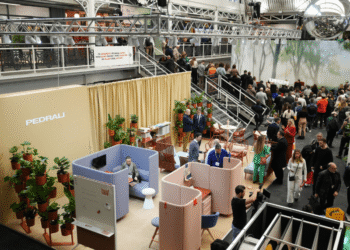
Held at the Business Design Centre, a central London venue known for hosting major trade exhibitions and conferences, the event provides an accessible meeting point for retailers, suppliers and service providers. According to the official event website (https://live.retail-week.com), the programme typically features keynote interviews, panel discussions and sector-specific briefings.
Who Attends
The audience generally includes:
– C-suite executives and senior directors from UK supermarkets and multichannel retailers
– Buying, merchandising and category management leaders
– FMCG manufacturers and branded suppliers
– Technology and data analytics firms serving retail
– Logistics and supply chain operators
– Investors and industry analysts
The cross-sector mix reflects the increasingly interconnected nature of modern retail, where decisions on pricing, sourcing, sustainability and digital infrastructure cut across organisational silos.
Market Context: UK Retail and Grocery in 2026
The timing of Retail Week Live and The Grocer 2026 Industry Focus is significant. The UK grocery market has undergone sustained turbulence since 2020, shaped by pandemic disruption, Brexit-related trade adjustments and the most prolonged inflationary period in decades. While input cost pressures have moderated compared with their peak, retailers continue to face tight margins and heightened price sensitivity among consumers.
Discounters remain structurally embedded in the market, maintaining pressure on established supermarket groups. At the same time, premium and convenience formats have proven resilient, reflecting a bifurcated consumer landscape in which value and quality coexist as priorities.
Beyond pricing, retailers are navigating structural change in three key areas:
1. Digital and Omnichannel Acceleration
Online grocery penetration stabilised after pandemic highs but remains materially above pre-2020 levels. Investment in automation, last-mile delivery efficiency and AI-driven demand forecasting has intensified. Events such as Retail Week Live provide a forum for assessing return on investment in digital infrastructure and evaluating emerging technologies, including predictive analytics and generative AI in merchandising.
2. Supply Chain Resilience
Geopolitical uncertainty and climate-related disruption have reinforced the need for diversified sourcing and robust logistics networks. The UK’s reliance on imported fresh produce continues to expose grocers to currency volatility and trade friction. Industry discussions are expected to address nearshoring, supplier collaboration and inventory optimisation.
3. ESG and Regulatory Pressures
Sustainability reporting requirements, packaging regulations and net-zero commitments are reshaping procurement and operations. Retailers face scrutiny from regulators and investors alike, making environmental and social governance a strategic priority rather than a branding exercise.
Economic and Competitive Significance
Retail is one of the UK’s largest private-sector employers and a major contributor to GDP. The grocery sector alone accounts for a substantial share of consumer spending. As such, the themes debated at Retail Week Live and The Grocer 2026 Industry Focus carry broader economic implications.
Industry conferences of this scale serve as barometers of sentiment. Executive commentary often signals shifts in capital allocation, expansion strategy and supplier partnerships. In a market where margins are typically measured in low single digits, incremental improvements in efficiency or pricing strategy can have outsized financial impact.
The event also provides a neutral setting for competitors and collaborators to assess market direction. For suppliers, it offers insight into retailer priorities for the coming financial year. For technology vendors and service providers, it presents opportunities to align solutions with retailer pain points, particularly around automation, shrink reduction and customer data utilisation.
Sector Representation and Innovation Themes
Although specific exhibitor and attendee lists for the 2026 edition are not publicly detailed, Retail Week Live events traditionally attract a broad spectrum of solution providers, including:
– Retail technology platforms
– Payment and fintech companies
– E-commerce and fulfilment specialists
– Store design and experiential agencies
– Data, loyalty and customer insight firms
Innovation discussions are likely to centre on practical implementation rather than speculative trends. Retail boards are increasingly demanding measurable returns on digital transformation projects. As a result, case studies demonstrating cost savings, revenue uplift or improved customer retention are expected to feature prominently.
In grocery specifically, private label development, category rationalisation and promotional strategy remain core topics. With shoppers continuing to compare prices aggressively, retailers are under pressure to balance competitiveness with profitability.
London as a Retail Hub
Hosting the event in London underscores the city’s role as a retail and financial centre. The Business Design Centre, located in Islington, has long served as a venue for industry gatherings, providing exhibition and conference facilities suited to large-scale professional audiences.
London’s concentration of retail headquarters, investment firms and media organisations enhances the event’s influence. Announcements or strategic signals delivered at Retail Week Live frequently resonate beyond the conference hall, shaping coverage in trade and national business media.
Strategic Outlook for 2026 and Beyond
As the UK retail industry enters 2026, the focus has shifted from crisis management to structural adaptation. Retail Week Live and The Grocer 2026 Industry Focus is expected to reflect this transition, with discussions moving beyond short-term cost containment toward sustainable competitive advantage.
Key forward-looking themes likely to dominate include:
– AI-driven personalisation and pricing
– Store portfolio optimisation amid changing footfall patterns
– Collaboration between retailers and suppliers on shared data
– Investment prioritisation in a higher-cost capital environment
For industry leaders, the event represents more than a networking opportunity. It functions as a strategic checkpoint, enabling executives to benchmark performance, reassess assumptions and recalibrate plans in response to evolving market conditions.
In a sector defined by narrow margins, intense competition and constant consumer scrutiny, the insights exchanged at Retail Week Live and The Grocer 2026 Industry Focus may influence decision-making across the UK retail and grocery landscape for the year ahead.

Related Posts