No products in the cart.

Fast Textile Fabrics Mar 10–12 2026 Industry Event
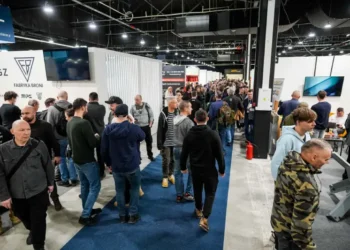
Fast Textile Fabrics Mar 10–12 2026 Industry Event Highlights Central Europe’s Expanding Textile Market
The Fast Textile Fabrics Mar 10–12 2026 Industry Event will take place from March 10 to March 12, 2026, at PTAK WARSAW EXPO in Nadarzyn, Masovian, Poland. Hosted at Al. Katowicka 62, 05-830 Nadarzyn, the event brings together fabric manufacturers, garment producers, distributors, designers, and sourcing specialists from across Europe and beyond. Organized at one of Central Europe’s largest exhibition venues, the event reflects the continued strategic importance of Poland as a textile and apparel sourcing hub.
Held at PTAK WARSAW EXPO (https://warsawexpo.eu/en/), the trade fair is dedicated to the fabrics and textile manufacturing segment, connecting upstream material suppliers with downstream apparel and fashion businesses. According to information available on the official event website (https://fasttextile.com/en/), the exhibition focuses on presenting a broad spectrum of textile materials and production solutions.
A Specialized Platform for the Textile Supply Chain
Scope of the Event
Fast Textile Fabrics is positioned as an industry-focused trade fair centered on fabrics and textile materials. The event typically attracts:

– Fabric manufacturers and textile mills
– Suppliers of knitted and woven fabrics
– Producers of technical textiles
– Accessory and trimming suppliers
– Private label manufacturers
– Fashion brands and apparel producers
– Importers, wholesalers, and distributors
The show serves as a sourcing and networking platform where buyers can evaluate material quality, pricing structures, and supply capabilities in a concentrated environment. For many European apparel companies, particularly small and medium-sized enterprises (SMEs), regional trade fairs such as this provide an alternative to long-distance sourcing in Asia.
Strategic Location in Nadarzyn, Poland
The choice of Nadarzyn, located near Warsaw in the Masovian region, reinforces Poland’s growing role in the European textile and apparel supply chain. PTAK WARSAW EXPO is one of the largest exhibition and congress centers in Central Europe, offering infrastructure suited for large-scale B2B events.
Poland’s geographic position between Western Europe and Eastern markets makes it a strategic logistics hub. The country has increasingly attracted textile manufacturers seeking proximity to EU customers while maintaining competitive production costs. As nearshoring gains traction in the post-pandemic supply chain landscape, events like Fast Textile Fabrics reflect this regional shift.
Industry Context: Textile Manufacturing in Transition
Nearshoring and Supply Chain Resilience
The European textile and apparel industry has undergone significant restructuring in recent years. Disruptions caused by global logistics bottlenecks, rising freight costs, and geopolitical uncertainties have encouraged brands to diversify sourcing strategies.
Nearshoring—relocating production closer to end markets—has gained momentum. Central and Eastern Europe, including Poland, Turkey, and Romania, have emerged as viable alternatives to Asian manufacturing centers. Fast Textile Fabrics 2026 takes place against this backdrop, offering a marketplace for European-based suppliers to showcase capacity and reliability.
For buyers, reduced lead times and lower transport risks are increasingly valuable. Events that connect regional producers with fashion brands help facilitate these new sourcing models.
Sustainability and Material Innovation
Sustainability remains a defining theme in the global textile market. Regulatory frameworks within the European Union, including circular economy initiatives and extended producer responsibility policies, are placing pressure on manufacturers to adopt more sustainable materials and transparent production processes.
Textile trade fairs increasingly feature:
– Recycled and regenerated fibers
– Organic cotton and certified materials
– Low-impact dyeing and finishing technologies
– Traceability and digital supply chain solutions
Although the full exhibitor list for the 2026 edition has not been detailed, industry trends suggest that sustainable fabric innovation will play a significant role at Fast Textile Fabrics. Buyers are expected to prioritize suppliers that align with evolving environmental standards and consumer expectations.
Economic and Market Significance
Poland’s Expanding Textile Sector
Poland maintains a diversified textile and apparel sector, with strengths in knitwear, workwear, home textiles, and technical fabrics. The country’s integration within the European Union facilitates tariff-free trade across member states, strengthening its appeal as a manufacturing base.
Trade fairs such as Fast Textile Fabrics contribute to regional economic activity by:
– Generating international business travel
– Supporting hospitality and logistics sectors
– Facilitating export contracts for domestic manufacturers
– Encouraging foreign investment partnerships
By hosting the event in Masovian Voivodeship, organizers leverage the region’s infrastructure and proximity to Warsaw’s business ecosystem.
SMEs and Cross-Border Trade
Small and medium-sized enterprises dominate much of Europe’s textile landscape. For these companies, international exhibitions provide cost-effective access to new markets. Rather than maintaining permanent overseas offices, firms can establish distributor relationships and sourcing agreements during concentrated three-day events.
Fast Textile Fabrics Mar 10–12 2026 Industry Event is structured as a B2B platform, enabling direct negotiation between producers and buyers. This model remains critical in an industry where material quality assessment, tactile evaluation, and in-person trust-building continue to influence purchasing decisions.
Exhibitors, Buyers, and Industry Segments
The event is expected to draw participants from multiple segments of the textile value chain:
– Fashion and apparel brands seeking seasonal collections
– Contract manufacturers sourcing raw materials
– Retail private labels exploring supplier diversification
– Designers and product developers reviewing new fabric trends
– Textile technology providers presenting production enhancements
The cross-border dimension of the show reflects Poland’s integration into European trade networks. Attendees from neighboring countries in Central and Eastern Europe are likely to represent a substantial portion of visitors, alongside Western European buyers evaluating nearshore partnerships.
Broader Market Outlook
European Textile Market Growth
While global textile production remains heavily concentrated in Asia, Europe continues to hold a strong position in high-value, technical, and sustainable textiles. Market growth is increasingly linked to innovation, automation, and compliance with environmental regulations rather than volume output alone.
The European Green Deal and related regulatory frameworks are expected to reshape production standards in the coming years. Companies that can demonstrate transparency, reduced carbon footprints, and circular material flows may gain competitive advantage.
Events like Fast Textile Fabrics provide a forum for these strategic discussions, enabling industry stakeholders to adapt to regulatory and consumer-driven change.
Digitalization and Smart Manufacturing
Automation, digital fabric printing, AI-assisted quality control, and integrated ERP systems are gradually transforming textile manufacturing. As production becomes more technologically advanced, supplier differentiation extends beyond cost and capacity to include technological capabilities.
Trade fairs increasingly serve as platforms not only for showcasing materials but also for presenting production technologies and workflow efficiencies that improve responsiveness and reduce waste.
A Barometer for Regional Industry Momentum
The Fast Textile Fabrics Mar 10–12 2026 Industry Event at PTAK WARSAW EXPO underscores Central Europe’s evolving role in the global textile supply chain. Positioned in Nadarzyn, Masovian, Poland, the event reflects broader market shifts toward nearshoring, sustainability, and regional resilience.
As the European textile sector navigates regulatory transformation and competitive pressures, industry gatherings such as this function as both commercial marketplaces and strategic indicators. The 2026 edition will provide insight into how suppliers and buyers are recalibrating their partnerships in a changing global trade environment.

Related Posts