No products in the cart.

Smart Energy Week 2026 Focuses on Clean Power Markets
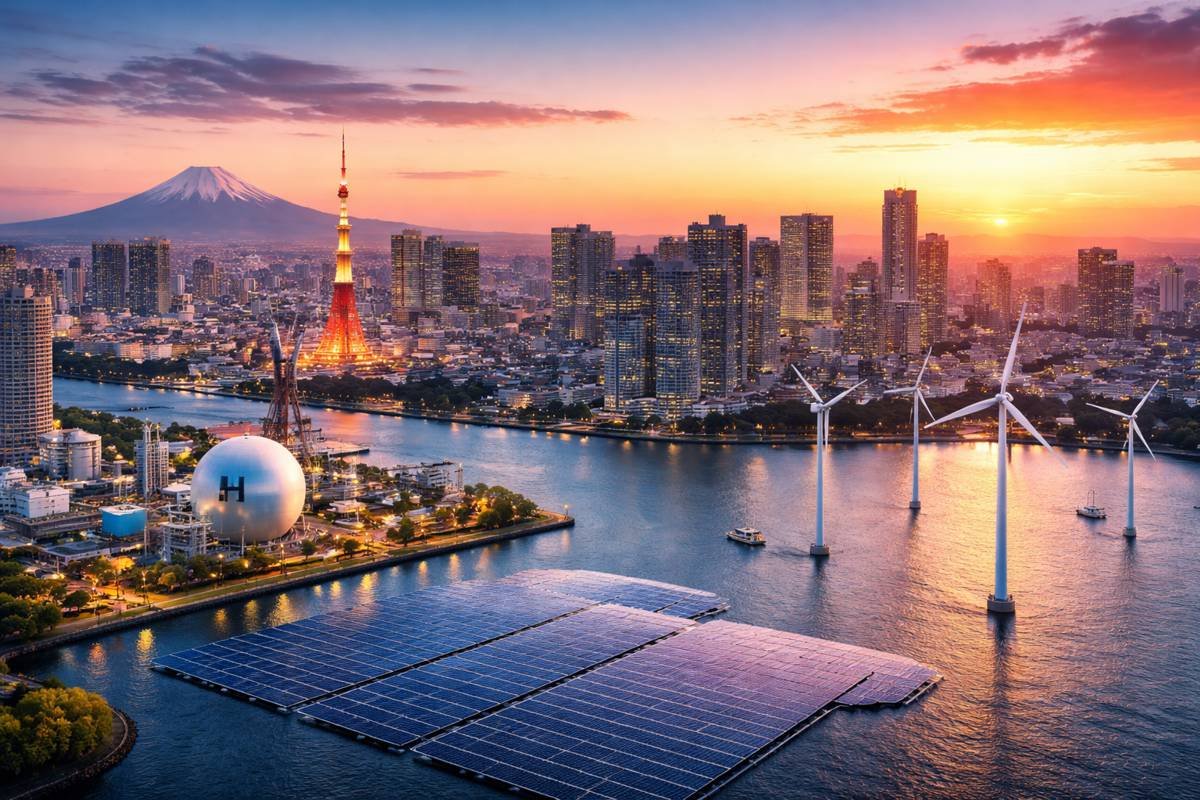
Smart Energy Week 2026 Focuses on Clean Power Markets
Smart Energy Week 2026 Focuses on Clean Power Markets as policymakers, utilities, manufacturers, and investors gather in Tokyo to assess the next phase of the global energy transition. Held from March 17 to March 19, 2026, at Tokyo Big Sight in Ariake, Koto-ku (3-11-1 Ariake, 135-0063, Tokyo, Japan), the event positions Japan at the center of discussions on renewable energy deployment, grid modernization, hydrogen development, and energy storage expansion.
Hosted at one of Asia’s largest exhibition and convention centers, TOKYO BIG SIGHT, the three-day exhibition and conference reflects accelerating shifts in clean power markets across Asia-Pacific and beyond. The event’s official venue information is available through Tokyo Big Sight, while event details and programming are outlined on the Smart Energy Week website.
A Convergence of Clean Energy Sectors
Comprehensive Industry Platform
Smart Energy Week has developed into a multi-sector platform covering renewable generation, hydrogen and fuel cells, battery technologies, smart grids, wind power, solar energy, biomass, zero-emission thermal power, and carbon neutrality solutions. By bringing these segments together under one umbrella, the event mirrors the increasing integration of energy systems globally.

Exhibitors typically include manufacturers of photovoltaic modules, battery storage providers, hydrogen electrolyzer developers, grid technology companies, power electronics suppliers, and engineering firms. Attendees span utility executives, project developers, institutional investors, policymakers, trading companies, and corporate energy buyers seeking decarbonization strategies.
The breadth of participation reflects the structural transformation underway in power markets. As countries pursue net-zero targets, investment is shifting from fossil-fuel-based generation toward diversified clean energy portfolios supported by storage and digital infrastructure.
Japan’s Strategic Energy Context
Japan’s role as host nation adds strategic weight to Smart Energy Week 2026. The country faces complex energy challenges: limited domestic fossil fuel resources, high energy import dependence, and ambitious decarbonization targets. Following its Green Growth Strategy and commitment to carbon neutrality by 2050, Japan has accelerated policy support for offshore wind, solar deployment, hydrogen supply chains, and battery storage systems.
Tokyo, as the political and financial center of Japan, provides a natural venue for international energy dialogue. Hosting the event at Tokyo Big Sight underscores the scale of industry participation and the importance of clean power markets to Japan’s economic and industrial strategy.
Clean Power Markets Enter a New Phase
From Capacity Growth to Market Optimization
The global renewable energy sector has moved beyond early-stage deployment in many regions. Solar and wind generation capacity has expanded rapidly over the past decade, driving down costs and reshaping wholesale electricity markets. However, high renewable penetration introduces new challenges: intermittency, grid congestion, price volatility, and balancing requirements.
Smart Energy Week 2026 highlights technologies designed to address these constraints. Battery energy storage systems, grid-forming inverters, demand response platforms, and advanced forecasting software are expected to feature prominently. Hydrogen, particularly green hydrogen produced from renewable electricity, is also central to discussions about seasonal storage and industrial decarbonization.
This shift from simple capacity expansion to market integration marks a turning point. Clean power markets are no longer defined solely by generation targets but by system reliability, flexibility, and cross-border energy trade.
Hydrogen and Storage Gain Momentum
Hydrogen remains a priority theme within Japan and across Asia-Pacific. Government-backed initiatives aim to develop hydrogen import terminals, domestic production facilities, and fuel-cell applications in transport and industry. Exhibitors in this segment are likely to showcase electrolyzers, compression systems, storage solutions, and fuel-cell technologies aligned with emerging global standards.
Battery storage, meanwhile, has become critical for stabilizing grids with high solar penetration. Japan’s advanced manufacturing base and research capabilities position it as both a technology innovator and a major market for storage deployment. Discussions at Smart Energy Week 2026 are expected to address cost trajectories, supply chain security, and integration with wholesale power markets.
Business and Investment Implications
Capital Flows and Market Signals
Clean energy investment globally has surpassed fossil fuel investment in recent years, reflecting structural shifts in capital allocation. Events such as Smart Energy Week serve as barometers for investor sentiment and technology maturity. Announcements of partnerships, pilot projects, and supply agreements often coincide with such gatherings.
Institutional investors and corporate buyers attending the event are increasingly focused on power purchase agreements (PPAs), carbon accounting frameworks, and risk management tools. The expansion of corporate renewable procurement in Asia is reshaping demand patterns and creating new opportunities for developers and utilities.
Japan’s financial institutions, trading houses, and industrial conglomerates play an influential role in scaling regional clean energy projects. Their participation reinforces Tokyo’s status as a capital hub for energy transition investments.
Supply Chain Resilience and Localization
The clean energy industry continues to navigate supply chain constraints, particularly in critical minerals, battery components, and semiconductor-based power electronics. Geopolitical tensions and industrial policy initiatives have prompted governments to encourage localized manufacturing and diversified sourcing strategies.
Smart Energy Week 2026 provides a forum for manufacturers and policymakers to address these concerns. Discussions around domestic production incentives, international cooperation, and technology transfer are likely to shape strategic decisions in the coming years.
Regional and Global Significance
Asia-Pacific as a Growth Engine
Asia-Pacific remains one of the fastest-growing regions for renewable energy deployment. Rapid urbanization, industrial demand, and electrification of transport are driving substantial increases in electricity consumption. At the same time, climate commitments and air quality concerns are accelerating coal phase-down strategies in several markets.
By convening stakeholders in Tokyo, Smart Energy Week 2026 underscores the region’s central role in determining the trajectory of global clean power markets. Collaboration between Japanese firms and partners from Southeast Asia, Australia, Europe, and North America reflects the increasingly interconnected nature of energy systems.
Policy, Regulation, and Market Design
Effective policy frameworks remain essential to scaling clean energy. Market design reforms—such as capacity markets, ancillary service compensation, and carbon pricing—are critical topics for regulators and industry leaders alike. Conferences and panel sessions at Smart Energy Week typically address these structural issues, providing a venue for dialogue between public and private sectors.
As governments refine energy transition roadmaps, events like Smart Energy Week help align technological innovation with regulatory evolution. The interplay between policy ambition and commercial viability will determine the pace of decarbonization over the next decade.
Outlook for Clean Power Markets
Smart Energy Week 2026 Focuses on Clean Power Markets at a time when the energy transition has entered a decisive phase. The emphasis is shifting from incremental renewable additions to comprehensive system transformation. Grid resilience, storage scalability, hydrogen economics, and digitalization now define competitive advantage in the sector.
By assembling a broad cross-section of stakeholders at Tokyo Big Sight from March 17–19, 2026, the event highlights both the progress achieved and the challenges ahead. As clean power markets mature, collaboration between technology providers, financiers, utilities, and governments will be essential to maintaining momentum.
In this context, Smart Energy Week 2026 serves not only as an exhibition but as a strategic forum reflecting the economic, technological, and geopolitical forces shaping the future of global energy.

Related Posts