No products in the cart.

EV Charging Summit and Expo March 17 to 19 2026
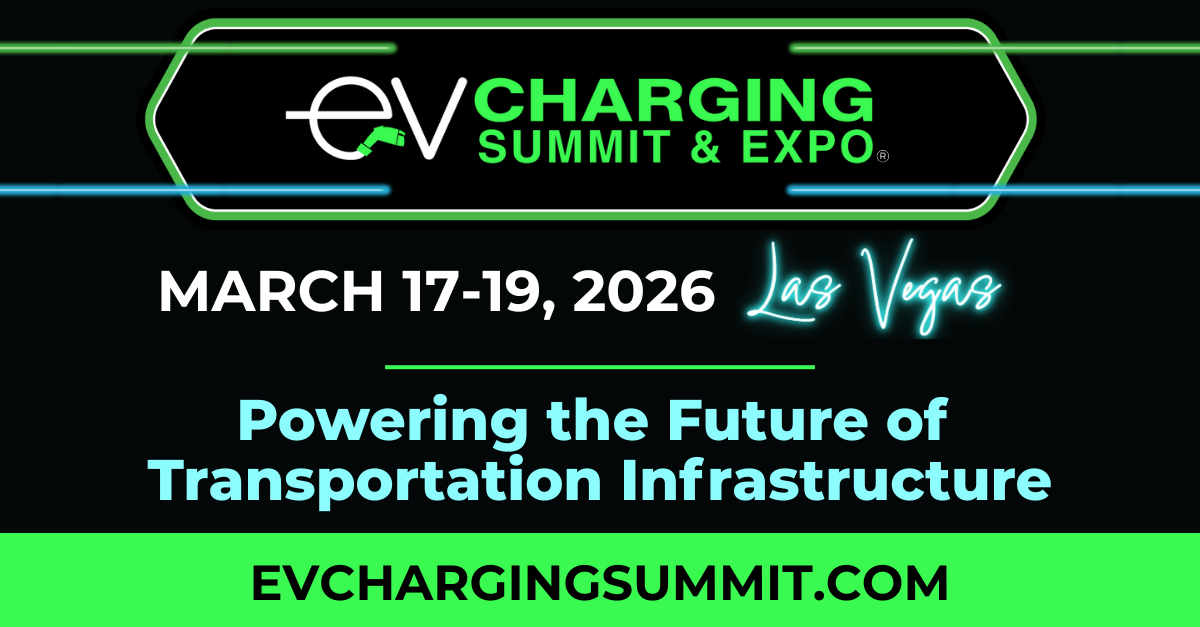

EV Charging Summit and Expo March 17 to 19 2026 Anchors Industry Dialogue in Las Vegas
The EV Charging Summit and Expo (EVCS & Expo) will take place from March 17 to March 19, 2026, at the Las Vegas Convention Center, located at 3150 Paradise Rd, Las Vegas, NV 89109. The three-day event positions itself as a central meeting point for stakeholders across the electric vehicle (EV) charging ecosystem, bringing together charging network operators, utilities, automakers, fleet managers, policymakers, technology providers, and infrastructure investors.
Hosted in one of the United States’ largest convention venues, the EV Charging Summit and Expo reflects the accelerating pace of EV adoption and the corresponding demand for scalable, reliable, and interoperable charging infrastructure.
Event Overview and Strategic Focus
What the EV Charging Summit and Expo Covers
The EV Charging Summit and Expo focuses on the development, deployment, and optimization of EV charging infrastructure. Unlike broader automotive or clean energy events, EVCS concentrates specifically on charging technologies, grid integration, software platforms, payment systems, and policy frameworks.

Core themes typically include:
– Fast-charging and ultra-fast DC infrastructure
– Fleet electrification and depot charging
– Utility coordination and grid modernization
– Public-private partnerships
– Federal and state incentive programs
– Interoperability and open standards
– Energy storage integration and renewable pairing
As EV penetration increases across passenger vehicles, commercial fleets, and public transportation, charging infrastructure has emerged as a critical bottleneck—and opportunity—within the mobility transition. EVCS serves as a forum for addressing these structural challenges.
Venue and Location Significance
The Las Vegas Convention Center (LVCVA), a major U.S. trade show hub, provides the scale necessary to host national and international exhibitors. Las Vegas, Nevada has become a strategic location for mobility and technology events, offering strong logistics infrastructure and accessibility for North American and global participants.
The venue’s capacity supports large exhibition halls, live demonstrations of charging hardware, and multi-track conference programming. Its location in a business-friendly state also underscores Nevada’s growing role in battery manufacturing and EV supply chain development.
Industry Context: Charging Infrastructure at an Inflection Point
Market Growth and Investment Trends
The global EV charging infrastructure market is entering a phase of rapid capital deployment. Governments across North America, Europe, and Asia have announced multibillion-dollar funding packages to accelerate charging network expansion. In the United States, federal and state programs are directing funding toward corridor charging, rural access, and disadvantaged communities.
At the same time, private investment continues to flow into:
– High-power DC fast charging networks
– Fleet-focused charging-as-a-service models
– Smart charging and load management software
– Vehicle-to-grid (V2G) solutions
The EV Charging Summit and Expo takes place against this backdrop of infrastructure scaling, where coordination between utilities, charging providers, and regulators is becoming increasingly complex.
Grid Integration and Energy Management
One of the most pressing issues discussed at EVCS is grid readiness. As EV adoption accelerates, utilities must manage increased electricity demand while maintaining reliability and affordability. The integration of renewable energy sources, battery storage systems, and demand response technologies has become central to charging network planning.
The summit provides a platform for dialogue between utility executives, regulators, and technology providers working on smart charging solutions, distributed energy resources, and dynamic pricing models.
Exhibitors and Technology Ecosystem
The EV Charging Summit and Expo typically attracts a wide spectrum of exhibitors, including:
– EV charging hardware manufacturers
– Charging network operators
– Software and payment platform developers
– Energy management and grid technology companies
– Construction and engineering firms
– Battery storage providers
Exhibition areas often showcase next-generation charging stations, modular systems for fleet depots, wireless charging prototypes, and integrated software dashboards for network management.
The event also highlights interoperability solutions designed to address fragmentation in charging standards, payment systems, and user interfaces. As the market matures, seamless user experience and cross-network compatibility are becoming competitive differentiators.
Attendee Profile and Cross-Sector Collaboration
The attendee base at EVCS reflects the multi-stakeholder nature of EV infrastructure deployment. Participants generally include:
– Utility executives and grid planners
– Commercial fleet operators
– Municipal transportation officials
– Real estate developers
– Policymakers and regulators
– Venture capital and infrastructure investors
– Automotive OEM representatives
Fleet electrification has emerged as a particularly important segment. Logistics companies, transit agencies, and corporate fleet operators are under regulatory and shareholder pressure to decarbonize. Charging depot design, operational cost modeling, and energy optimization are therefore major discussion topics.
For policymakers, the event provides insight into implementation challenges tied to incentive programs and infrastructure rollout targets.
Economic Impact and Regional Significance
Local Economic Effects
Hosting the EV Charging Summit and Expo contributes to Las Vegas’ convention-driven economy. Large-scale trade shows generate revenue for hospitality, transportation, and service industries while reinforcing the city’s position as a leading destination for technology and energy conferences.
Beyond short-term economic activity, Nevada’s broader role in battery production and EV manufacturing supply chains enhances the relevance of hosting infrastructure-focused events within the state.
National and International Implications
At a national level, EVCS reflects the strategic importance of charging infrastructure in meeting emissions reduction targets and transportation electrification goals. Without adequate charging access, EV adoption risks slowing, particularly among apartment dwellers, rural drivers, and commercial fleets.
Internationally, the event facilitates cross-border dialogue on standards, interoperability, and investment models. Global charging providers and technology firms monitor U.S. policy developments and funding programs, while American companies assess international expansion opportunities.
Policy and Regulatory Dimensions
The EV charging sector remains heavily influenced by regulatory frameworks. Federal funding mechanisms, state-level zero-emission mandates, building codes, and utility rate structures all shape deployment timelines.
The EV Charging Summit and Expo provides a venue for regulators and industry representatives to discuss:
– Permitting reform
– Interconnection timelines
– Incentive distribution models
– Public charging accessibility standards
– Cybersecurity requirements
As infrastructure expands, attention is increasingly shifting from initial installation to long-term reliability, maintenance standards, and data transparency.
Strategic Importance for the EV Ecosystem
The EV Charging Summit and Expo March 17 to 19 2026 underscores the transition of EV charging from a niche segment to core infrastructure. The industry is moving beyond pilot projects toward nationwide and global network buildouts.
Charging availability has become a determining factor in consumer EV adoption rates, fleet electrification strategies, and automotive manufacturer competitiveness. As a result, the summit serves not only as a trade exhibition but as a strategic coordination platform for an industry undergoing structural transformation.
With stakeholders gathering at the Las Vegas Convention Center from March 17 to March 19, 2026, the EV Charging Summit and Expo will reflect both the progress achieved and the operational challenges that remain in building a resilient, scalable EV charging ecosystem.