No products in the cart.

AMCA 2026 Conference on Mosquito Control Industry
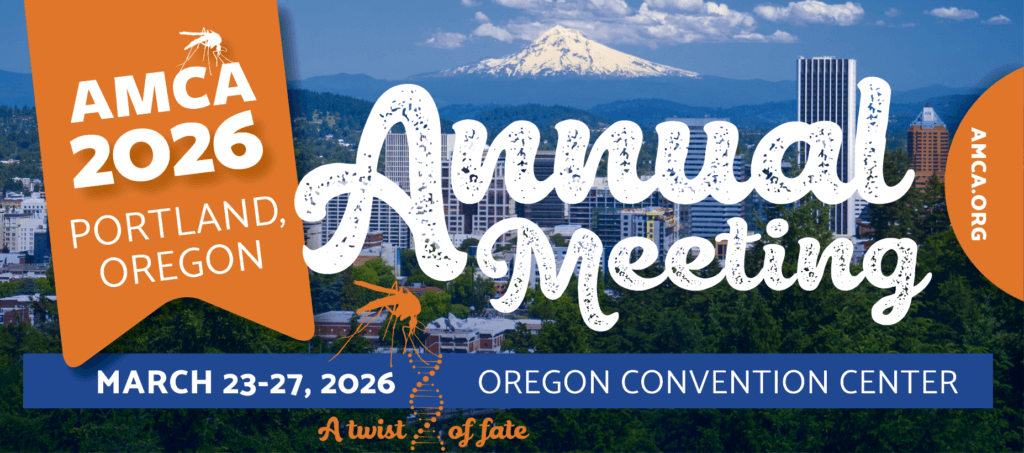

AMCA 2026 Conference on Mosquito Control Industry to Convene in Portland
The AMCA 2026 Conference on Mosquito Control Industry will take place from March 23 to March 27, 2026, at the Oregon Convention Center in Portland, Oregon. Organized by the American Mosquito Control Association (AMCA), the annual event is one of the leading gatherings dedicated to mosquito control, vector management, and public health protection in the United States.
Hosted at the Oregon Convention Center, located at 777 NE Martin Luther King Jr Blvd, Portland, OR 97232, the conference will bring together public health officials, mosquito control district leaders, researchers, product manufacturers, and policy stakeholders. Event details and registration information are available through the official event website.
A Central Forum for Vector Control Professionals
The AMCA 2026 Conference serves as a primary forum for professionals engaged in mosquito surveillance, control operations, research, and regulatory oversight. Attendees typically include representatives from local and state mosquito control districts, public health departments, academic institutions, federal agencies, and private-sector solution providers.

The conference program traditionally features technical sessions, scientific presentations, policy discussions, and committee meetings. Core subject areas include vector-borne disease surveillance, insecticide resistance management, biological control strategies, integrated mosquito management (IMM), and emerging technologies such as remote sensing, drone applications, and data-driven surveillance systems.
In addition to educational programming, the exhibition component of the AMCA conference provides a marketplace for manufacturers and service providers to showcase products such as larvicides, adulticides, spraying equipment, traps, diagnostic tools, GIS software, and laboratory services. The interaction between public agencies and commercial suppliers underscores the applied, operational nature of the mosquito control industry.
Industry Context: Rising Vector-Borne Disease Risks
The mosquito control sector has grown in strategic importance amid increasing concerns about vector-borne diseases. In the United States and globally, outbreaks of West Nile virus, Zika virus, dengue, chikungunya, and other arboviruses have elevated the role of organized mosquito abatement programs.
Climate variability, urbanization, global travel, and shifting ecological conditions are expanding mosquito habitats and extending transmission seasons. These dynamics are placing pressure on public health systems to modernize surveillance infrastructure and invest in proactive vector management strategies.
The AMCA 2026 Conference occurs against this backdrop of evolving risk. Industry discussions are expected to address how mosquito control programs can adapt to longer breeding seasons, insecticide resistance challenges, and heightened public scrutiny over pesticide use and environmental impact.
Market Trends in Mosquito Control
The mosquito control industry spans public-sector programs, private pest management companies, biotechnology firms, and equipment manufacturers. Market growth is being driven by several converging trends:
Technological Innovation
Advances in genetic control methods, including sterile insect techniques and gene-based strategies, are attracting research funding and regulatory attention. At the same time, digital tools such as geographic information systems (GIS), predictive analytics, and automated trapping systems are transforming operational efficiency.
Exhibitors at AMCA 2026 are expected to highlight innovations that integrate field data collection with cloud-based platforms, enabling real-time decision-making for mosquito abatement districts.
Resistance Management
Insecticide resistance remains a central concern for mosquito control programs. Repeated use of chemical classes has led to reduced efficacy in some regions, prompting demand for new formulations and integrated pest management approaches. The conference provides a venue for sharing resistance monitoring data and discussing best practices for rotation strategies.
Sustainability and Environmental Oversight
Regulatory frameworks at the federal and state levels are shaping product development and procurement decisions. Environmental impact assessments, endangered species considerations, and community engagement practices are increasingly influencing how mosquito control operations are conducted. Industry participants at AMCA 2026 are likely to examine how to balance effective disease prevention with environmental stewardship.
Economic and Strategic Importance
Mosquito control is closely tied to economic resilience. Tourism-dependent regions, agricultural areas, and densely populated urban centers all face financial risks from disease outbreaks. Effective vector management reduces healthcare costs, minimizes productivity losses, and supports community stability.
The AMCA 2026 Conference plays a strategic role by facilitating collaboration between public agencies and commercial suppliers. Procurement decisions for equipment, chemicals, and surveillance technologies are often informed by interactions and demonstrations at the annual meeting. For vendors, the event represents a concentrated opportunity to engage directly with decision-makers responsible for municipal and regional mosquito control budgets.
Portland’s selection as host city also carries regional significance. The Pacific Northwest has experienced changing mosquito patterns influenced by climate variability and urban growth. Hosting the conference at the Oregon Convention Center positions local and regional agencies to showcase their initiatives while benefiting from national and international expertise.
Policy, Research, and Federal Engagement
The American Mosquito Control Association has historically served as a platform for dialogue between practitioners and federal stakeholders, including agencies involved in public health, environmental protection, and disease control. The 2026 conference is expected to include discussions on federal funding mechanisms, research grants, and emergency response coordination.
Academic researchers use the event to present peer-reviewed findings on mosquito biology, pathogen transmission, and control methodologies. These presentations often influence field protocols and guide investment priorities for both public agencies and private firms.
Cross-Sector Participation
The AMCA 2026 Conference on Mosquito Control Industry attracts a multidisciplinary audience. Participants include entomologists, epidemiologists, environmental scientists, vector control technicians, equipment engineers, and policy analysts. This cross-sector composition reflects the complexity of mosquito management, which intersects public health, environmental science, engineering, and regulatory policy.
For emerging professionals, the conference also serves as a career development platform, offering networking opportunities and exposure to evolving best practices. For established agencies, it functions as a benchmark event to evaluate new products and operational strategies.
Outlook for 2026 and Beyond
As vector-borne disease threats evolve, the mosquito control industry faces both operational and strategic inflection points. Funding volatility, regulatory changes, and technological disruption are reshaping how programs are structured and delivered.
The AMCA 2026 Conference in Portland provides a timely forum for industry stakeholders to assess these changes. By combining scientific exchange, product exhibition, and policy dialogue, the event reinforces its role as a central meeting point for the mosquito control sector in the United States.
With growing public awareness of vector-borne risks and increased demand for effective, sustainable interventions, the outcomes and discussions emerging from AMCA 2026 are likely to influence industry practices and investment decisions well beyond the five-day gathering in March.