No products in the cart.

Ceramitec Mar 24-26 2026 Focuses on Ceramics Industry
Ceramitec Mar 24-26 2026 Focuses on Ceramics Industry at MESSE MÜNCHEN
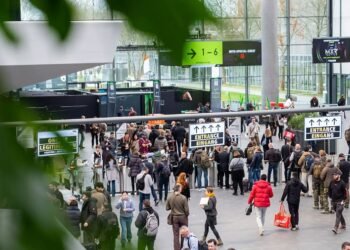
Ceramitec Mar 24-26 2026 Focuses on Ceramics Industry as global manufacturers, technology providers, and materials specialists gather in Munich, Germany, to assess the direction of one of the world’s most versatile industrial sectors. Scheduled from March 24 to March 26, 2026, the event will take place at MESSE MÜNCHEN, Am Messesee 2, 81829 München, Bavaria, positioning the Bavarian capital once again as a key meeting point for the international ceramics community.
Organized at one of Europe’s largest and most advanced exhibition venues, Ceramitec 2026 is expected to attract a cross-section of decision-makers from across the ceramics value chain. According to the official event website (https://www.ceramitec.com/en/), the trade fair is dedicated to the full spectrum of the ceramics industry, from raw materials and manufacturing technologies to advanced ceramics applications.
A Global Platform for the Ceramics Value Chain
Scope and Industry Representation
Ceramitec has built its reputation as a comprehensive trade fair covering traditional ceramics, advanced ceramics, powder metallurgy, and related materials technologies. The event typically brings together equipment manufacturers, kiln and furnace suppliers, raw material producers, automation specialists, and research institutions. End-user industries represented often include construction, automotive, electronics, aerospace, energy, and medical technology.

By assembling stakeholders from across these segments, Ceramitec 2026 functions as both a commercial marketplace and a technical knowledge forum. Exhibitors showcase innovations in shaping, pressing, sintering, and digital manufacturing processes, while visitors assess capital equipment investments and strategic partnerships.
Who Attends and Why It Matters
Attendees at Ceramitec commonly include plant managers, procurement executives, R&D leaders, engineers, and C-level decision-makers. Their presence underscores the fair’s role as a venue for high-level business discussions rather than a purely promotional showcase.
The ceramics industry is capital-intensive, and purchasing decisions for kilns, automation systems, and advanced processing technologies often involve long-term strategic planning. Trade fairs such as Ceramitec provide an environment where buyers can evaluate solutions side by side, compare technological standards, and engage directly with manufacturers. In an industry where process optimization can significantly affect energy consumption and emissions, face-to-face technical consultation remains critical.
Market Context: A Sector Under Transformation
Growth in Advanced Ceramics
The global ceramics market has evolved significantly beyond traditional tiles and sanitaryware. Advanced ceramics—used in semiconductors, electric vehicles, medical implants, and renewable energy systems—are experiencing sustained growth. These materials offer high heat resistance, electrical insulation, and mechanical strength, making them indispensable in next-generation technologies.
Ceramitec Mar 24-26 2026 Focuses on Ceramics Industry developments in these high-performance segments, reflecting broader industrial shifts. As Europe strengthens its semiconductor manufacturing capacity and electric mobility infrastructure, demand for precision ceramic components continues to rise. The event provides insight into how suppliers are adapting to these structural changes.
Sustainability and Energy Efficiency
Energy efficiency and decarbonization are central challenges for ceramics manufacturers. Kilns and firing processes are energy-intensive, often relying on natural gas. In response to rising energy costs and regulatory pressures in the European Union, companies are investing in hybrid firing technologies, electrification, hydrogen-ready systems, and waste heat recovery.
At MESSE MÜNCHEN, exhibitors are expected to present solutions aimed at reducing carbon footprints and improving resource efficiency. Digital monitoring systems, AI-driven process optimization, and advanced refractory materials are among the innovations shaping the industry’s sustainability agenda.
The strategic importance of these developments extends beyond compliance. Lower energy consumption directly impacts profitability, especially in regions with high energy prices. As a result, Ceramitec 2026 serves as a platform where environmental objectives and economic imperatives converge.
Germany and Bavaria as Strategic Hosts
Munich’s Role in Industrial Trade Fairs
Hosting Ceramitec 2026 at MESSE MÜNCHEN reinforces Germany’s position as a central hub for industrial trade fairs. The venue, located in Munich, Bavaria, is known for accommodating large-scale international exhibitions across technology, manufacturing, and materials sectors (https://messe-muenchen.de/de/).
Germany’s strong manufacturing base, combined with its engineering expertise, makes it a natural setting for a ceramics-focused event. The country is home to leading machinery producers and advanced materials research institutions. Bavaria, in particular, supports a network of high-tech industries, from automotive engineering to aerospace, all of which rely on advanced ceramic components.
Economic Impact and Regional Benefits
International trade fairs generate measurable economic activity for host cities through hospitality, transport, and service sectors. Beyond immediate spending, Ceramitec contributes to long-term business development by facilitating cross-border trade agreements and technology transfers.
For small and medium-sized enterprises (SMEs) in the ceramics supply chain, participation can open access to export markets. For multinational corporations, the fair provides a consolidated venue to reinforce brand presence and assess competitive positioning within Europe.
Innovation, Digitalization, and Industry 4.0
Automation and Smart Manufacturing
Digitalization remains a defining trend across industrial manufacturing, and the ceramics sector is no exception. Industry 4.0 concepts—integrating sensors, data analytics, and interconnected machinery—are increasingly embedded in ceramic production lines.
Ceramitec Mar 24-26 2026 Focuses on Ceramics Industry adoption of smart manufacturing technologies. Real-time process control, predictive maintenance, and automated quality assurance systems are expected to feature prominently among exhibitor offerings. These tools aim to reduce waste, enhance consistency, and improve throughput in a sector traditionally challenged by variable raw materials and complex firing cycles.
Research and Cross-Sector Collaboration
The fair also plays a role in fostering collaboration between academia and industry. Research institutions often participate to present breakthroughs in material science, nanoceramics, and additive manufacturing. As ceramics intersect with fields such as battery technology and hydrogen infrastructure, interdisciplinary cooperation becomes increasingly important.
Such exchanges are particularly relevant in Europe, where public-private partnerships and EU-funded research initiatives seek to strengthen industrial competitiveness.
Strategic Outlook for 2026 and Beyond
As global supply chains continue to adjust to geopolitical shifts and sustainability targets, the ceramics industry faces both pressure and opportunity. Reshoring of manufacturing, diversification of raw material sources, and investments in cleaner technologies are reshaping competitive dynamics.
Ceramitec 2026 arrives at a pivotal moment. By bringing together stakeholders from across continents in Munich from March 24 to March 26, the event reflects the sector’s transition toward higher-value applications, lower emissions, and digitally enabled production.
In this context, Ceramitec is more than a trade fair; it is a barometer for the ceramics industry’s strategic direction. The discussions and agreements forged at MESSE MÜNCHEN are likely to influence investment decisions, technology adoption, and market expansion across Europe and beyond in the years ahead.

Related Posts