No products in the cart.

Mid-America Trucking Show MATS 2026 Louisville
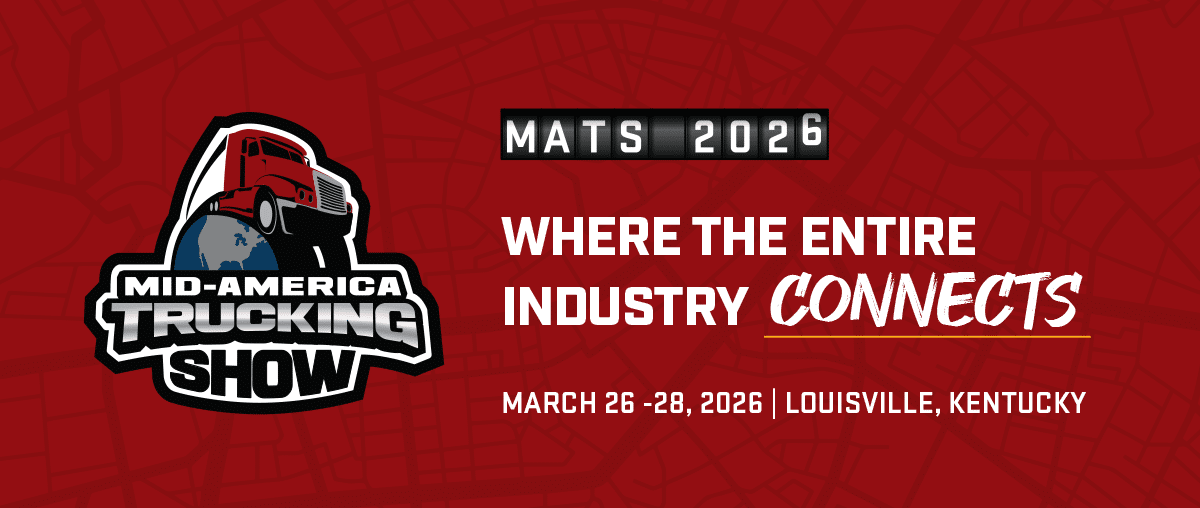

Mid-America Trucking Show (MATS) 2026 to Spotlight Industry Transformation in Louisville
The Mid-America Trucking Show (MATS) 2026 will take place from March 26 to March 28, 2026, at the Kentucky Exposition Center, located at 937 Phillips Ln, Louisville, Kentucky 40209, United States. Recognized as one of the largest annual gatherings in the heavy-duty trucking sector, MATS serves as a central marketplace and industry forum for manufacturers, suppliers, fleet operators, and independent drivers across North America.
Held in Louisville, a historic logistics hub positioned along major freight corridors, the event continues to reflect the evolving priorities of the U.S. trucking industry, from decarbonization and automation to supply chain resilience and workforce development.
Official event information is available through the Mid-America Trucking Show website (https://www.truckingshow.com/) and venue details through the Kentucky Exposition Center (https://kec.org/).

Event Overview and Industry Role
What MATS Represents
The Mid-America Trucking Show is widely regarded as a key annual platform for the heavy-duty trucking industry. It brings together original equipment manufacturers (OEMs), parts and component suppliers, aftermarket service providers, technology developers, and logistics companies.
The three-day event typically features:
– New truck model launches and equipment debuts
– Advanced powertrain and electrification showcases
– Telematics and fleet management technologies
– Safety systems and compliance solutions
– Trailer, tire, and aftermarket product exhibitions
Attendees generally include fleet executives, owner-operators, maintenance professionals, distributors, and industry analysts. For many companies, MATS functions as both a product launch venue and a commercial deal-making environment.
Strategic Location: Kentucky Exposition Center
The Kentucky Exposition Center in Louisville provides more than one million square feet of exhibit space, making it one of the largest convention facilities in the United States. Its proximity to major interstate highways and UPS Worldport, one of the world’s largest air cargo hubs, reinforces Louisville’s position as a strategic freight and logistics center.
Hosting MATS at this venue enables large-scale equipment displays, including full tractor-trailer units and heavy machinery, which are central to the show’s format.
Market Context: U.S. Trucking at a Turning Point
Freight Demand and Economic Signals
The U.S. trucking industry remains a backbone of the national economy, moving the majority of domestic freight by tonnage. However, the sector has faced cyclical freight slowdowns, fluctuating diesel prices, and evolving regulatory pressures in recent years.
MATS 2026 arrives at a time when carriers are balancing cautious capital expenditures with long-term modernization plans. Freight volumes, inventory cycles, and consumer demand patterns continue to influence fleet purchasing decisions. Trade policies and infrastructure investments also shape fleet expansion strategies.
Electrification and Alternative Fuels
One of the central themes likely to dominate MATS 2026 is vehicle electrification and alternative fuel adoption. OEMs are increasingly developing battery-electric trucks for regional haul and last-mile operations, while hydrogen fuel cell concepts and renewable diesel solutions remain under exploration.
Regulatory frameworks at the state and federal levels, including emissions standards and zero-emission vehicle mandates in certain states, are accelerating research and development. Exhibitors at MATS typically use the event to demonstrate advancements in:
– Electric drivetrains
– Charging infrastructure partnerships
– Hydrogen fuel systems
– Hybrid technologies
Fleet operators attending the show often evaluate total cost of ownership models, government incentives, and infrastructure readiness before committing to large-scale deployment.
Digitalization and Telematics
Telematics, artificial intelligence, and data-driven fleet management systems are reshaping operational efficiency. Technology providers use MATS to showcase solutions related to:
– Predictive maintenance
– Route optimization
– Real-time asset tracking
– Driver performance analytics
– Compliance automation
With margins often narrow in freight operations, these technologies are increasingly viewed as strategic tools rather than optional upgrades. Data integration across dispatch, maintenance, and compliance systems has become a key focus for both large carriers and independent operators.
Exhibitors and Sector Representation
MATS traditionally attracts a broad cross-section of the trucking ecosystem. Exhibitors typically include:
– Heavy-duty truck manufacturers
– Engine and powertrain developers
– Trailer manufacturers
– Tire and wheel suppliers
– Aftermarket parts distributors
– Safety and driver assistance technology firms
– Financial services and leasing companies
The event also provides visibility for smaller suppliers and startups aiming to introduce specialized components or digital solutions. For emerging companies, participation in MATS offers direct access to decision-makers responsible for fleet procurement and operations.
Industry suppliers often time product announcements to coincide with MATS to maximize media coverage and customer engagement.
Business Impact and Deal-Making Environment
Procurement and Partnerships
Beyond product displays, MATS functions as a commercial transaction hub. Fleet operators use the event to compare equipment, negotiate supply agreements, and assess long-term vendor partnerships. Leasing firms and financial institutions also attend, offering structured financing solutions tailored to fluctuating freight markets.
For manufacturers, the show provides direct feedback from drivers and fleet managers, influencing product design and refinement. This interaction between engineering teams and end users is considered one of the event’s strategic advantages.
Workforce and Driver Engagement
The trucking industry continues to face workforce challenges, including driver shortages and retention concerns. Events like MATS provide recruitment opportunities and highlight initiatives focused on:
– Driver comfort and safety improvements
– Training technologies
– Diversity and inclusion efforts
– Career development pathways
The presence of owner-operators is particularly significant, as they represent a substantial share of long-haul freight capacity in the United States.
Economic Importance to Louisville and the Region
The Mid-America Trucking Show generates measurable economic impact for Louisville and the broader Kentucky region. Large-scale industry events drive hotel occupancy, restaurant activity, transportation services, and temporary employment.
Louisville’s established logistics infrastructure enhances its appeal as a host city. The Kentucky Exposition Center’s capacity to accommodate heavy equipment exhibitions ensures the event can scale alongside industry growth.
Regional policymakers and economic development agencies often view recurring trade shows like MATS as catalysts for sustained business tourism and industrial investment.
Outlook for MATS 2026
As the trucking industry navigates regulatory change, technological transformation, and economic uncertainty, MATS 2026 is positioned as a barometer of sector sentiment. The event’s timing in late March aligns with annual procurement planning cycles, making it a critical venue for unveiling new models and strategic initiatives.
From electrification strategies to advanced safety systems and digital fleet platforms, the Mid-America Trucking Show in Louisville is expected to reflect both the challenges and opportunities facing North American freight transportation.
By convening manufacturers, suppliers, fleet operators, and independent drivers under one roof at the Kentucky Exposition Center, MATS 2026 will continue to serve as a central forum for shaping the future of the trucking industry in the United States.