No products in the cart.

Pneumatics Warsaw 2026 Industrial Expo Update

Pneumatics Warsaw 2026 Industrial Expo Update
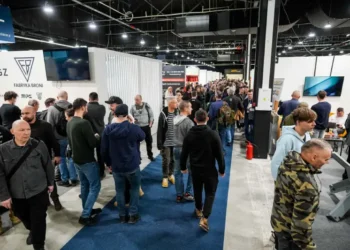
Pneumatics Warsaw 2026 Industrial Expo Update signals continued momentum in Central Europe’s industrial technology sector, as manufacturers, automation specialists, and engineering firms prepare to convene in Nadarzyn, Poland, from April 14 to April 16, 2026. The event will take place at PTAK WARSAW EXPO, located at Al. Katowicka 62, 05-830 Nadarzyn, in the Masovian region.
Hosted at one of the largest exhibition and congress centers in Poland, the expo underscores the growing importance of pneumatic systems, compressed air technologies, and industrial automation solutions in the European manufacturing landscape. More information about the venue can be found at https://warsawexpo.eu/en/, while event details are available via https://pneumaticswarsaw.com/en/.
Event Overview and Strategic Focus
Pneumatics Warsaw 2026 is positioned as a specialized industrial trade fair dedicated to pneumatic systems, components, and related automation technologies. The event brings together manufacturers of pneumatic actuators, valves, compressors, air preparation systems, fittings, and control technologies, alongside integrators and end users from diverse industrial sectors.

The expo is designed for engineers, plant managers, production directors, procurement specialists, system integrators, and R&D professionals. Its focus extends beyond product display to encompass technical knowledge exchange, system optimization strategies, and discussions around efficiency, sustainability, and digital transformation.
As European industries accelerate modernization efforts, pneumatic systems remain foundational in sectors such as automotive manufacturing, food processing, packaging, pharmaceuticals, heavy machinery, and logistics automation. The event’s emphasis reflects the continued relevance of compressed air and motion control technologies in high-speed, high-precision industrial environments.
PTAK WARSAW EXPO as a Regional Industrial Hub
PTAK WARSAW EXPO in Nadarzyn has developed into a major exhibition platform for Central and Eastern Europe. Its strategic location near Warsaw enhances accessibility for domestic and international participants. Poland’s geographic position between Western Europe and emerging Eastern markets has made it an attractive destination for industrial trade events.
The Masovian region, with Warsaw as its economic center, plays a pivotal role in Poland’s manufacturing and logistics networks. By hosting Pneumatics Warsaw 2026 at this venue, organizers align the event with broader industrial supply chains and regional infrastructure development.
The choice of Nadarzyn reflects a broader trend of decentralizing industrial trade shows from capital city centers while maintaining proximity to transport hubs and business districts.
Industry Context: Growth in Pneumatics and Automation
The global pneumatics market is experiencing steady growth, driven by increasing automation in manufacturing and logistics. Compressed air systems remain a cost-effective and reliable solution for motion control and material handling. Despite competition from electric actuators in certain applications, pneumatic systems continue to dominate in environments requiring high force-to-weight ratios, durability, and operational simplicity.
In Europe, investment in Industry 4.0 technologies is reshaping how pneumatic components are integrated into digital production ecosystems. Smart sensors, predictive maintenance solutions, and energy-efficient compressors are becoming standard expectations rather than optional upgrades.
Poland’s manufacturing sector has expanded significantly over the past decade, supported by foreign direct investment and EU structural funding. As production facilities modernize, demand for advanced pneumatic systems and integrated automation platforms is rising. Pneumatics Warsaw 2026 serves as a reflection of this upward trajectory.
Key Sectors Represented
Manufacturing and Heavy Industry
Automotive assembly plants, metal fabrication facilities, and machinery producers rely heavily on pneumatic tools and actuators for repetitive, high-speed tasks. Exhibitors are expected to present systems designed for enhanced durability, reduced air leakage, and improved energy efficiency—critical concerns amid rising energy costs.
Food and Pharmaceutical Processing
In hygienic production environments, pneumatic systems are valued for their clean operation and compatibility with washdown requirements. Innovations in stainless steel components and contamination-resistant designs are likely to feature prominently at the expo.
Logistics and Packaging
As e-commerce continues to drive warehouse automation, pneumatic grippers, sorting mechanisms, and conveyor controls remain central to material handling systems. The integration of pneumatics with robotics and AI-driven warehouse management platforms represents a growing area of development.
Energy Efficiency and Sustainability
One of the defining themes in the industrial compressed air sector is energy optimization. Compressed air is often cited as one of the most expensive utilities in manufacturing due to inefficiencies and leakage. Industry analysts estimate that significant portions of industrial energy consumption are tied to poorly optimized pneumatic systems.
Events like Pneumatics Warsaw 2026 provide a platform for discussing leak detection technologies, variable-speed compressors, and smart monitoring systems. As European climate targets tighten and energy prices fluctuate, companies are prioritizing lifecycle cost analysis and carbon footprint reduction in their capital investment decisions.
Sustainability considerations are increasingly influencing procurement policies. Equipment manufacturers are responding by developing systems with lower air consumption rates and enhanced diagnostic capabilities.
Digital Transformation and Smart Pneumatics
Digitalization is reshaping traditional mechanical systems. Smart pneumatics—equipped with embedded sensors and IoT connectivity—enable real-time monitoring of pressure, temperature, and performance metrics. Data-driven insights can reduce downtime and support predictive maintenance strategies.
The integration of pneumatics into broader industrial IoT ecosystems aligns with the European Union’s push toward digital manufacturing. For exhibitors, demonstrating compatibility with industrial communication protocols and automation software platforms is becoming essential.
Pneumatics Warsaw 2026 is expected to highlight these advancements, reflecting the convergence of mechanical engineering and data analytics.
Economic and Business Impact
Trade fairs such as Pneumatics Warsaw contribute to regional economic activity by attracting domestic and international visitors, supporting hospitality, logistics, and service sectors. More significantly, they facilitate B2B partnerships, distribution agreements, and cross-border investment.
Poland’s role as a manufacturing base for multinational corporations increases the strategic relevance of industry-specific events. Companies seeking to enter or expand within the Central European market often use such expos to assess demand, identify distributors, and evaluate regulatory frameworks.
The timing of the event in April 2026 positions it within the spring trade fair calendar, allowing companies to align product launches and capital expenditure plans with mid-year procurement cycles.
Outlook for 2026 and Beyond
As industrial automation continues to expand across Europe, the importance of specialized exhibitions focused on core enabling technologies is expected to grow. Pneumatics Warsaw 2026 Industrial Expo Update reflects both sector resilience and adaptation to technological change.
With Poland reinforcing its position as a regional manufacturing powerhouse, and with sustainability and digitalization reshaping industrial priorities, the expo stands as a barometer for the direction of pneumatic systems and compressed air technologies in Europe.
By convening industry stakeholders at PTAK WARSAW EXPO in Nadarzyn from April 14 to April 16, 2026, Pneumatics Warsaw 2026 is set to provide a focused forum for examining the evolving role of pneumatics within an increasingly automated and efficiency-driven industrial economy.

Related Posts