No products in the cart.

ASIS International – European Security Conference Mar 23–25 2026
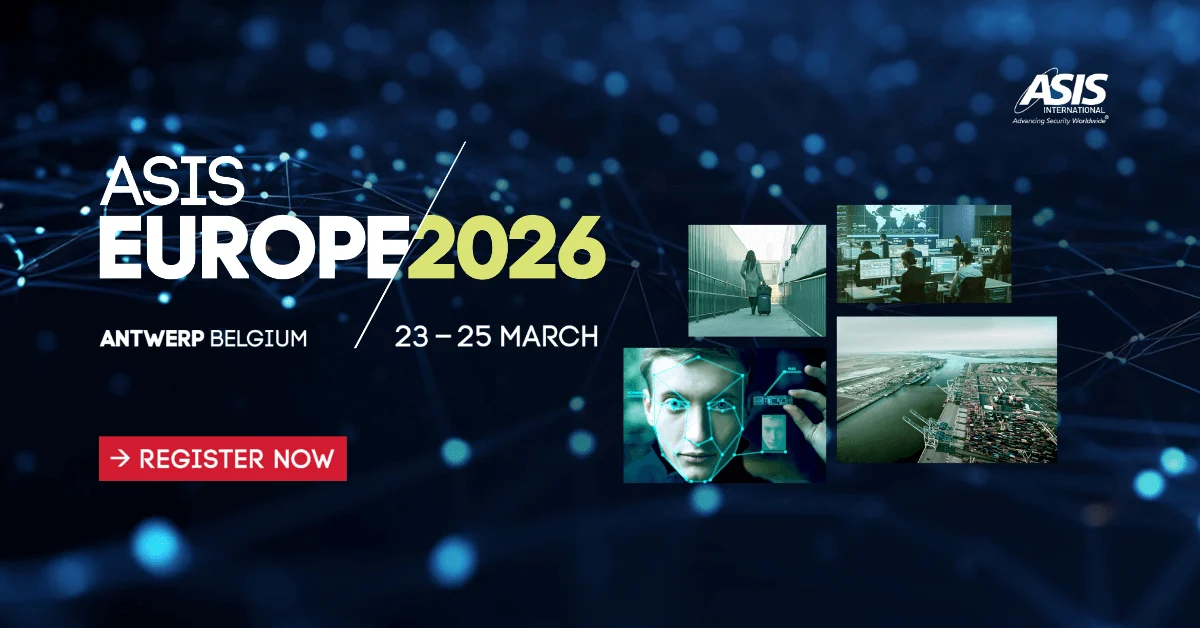
ASIS International – European Security Conference 2026: Security Strategy and Risk Management in a Converging Threat Landscape
The ASIS International – European Security Conference is scheduled for March 2026 in Antwerp, Belgium, at Koningin Astridplein 20–26. Organized by ASIS International, a leading global organization for security professionals, the event serves as a regional focal point for discussions on corporate security, risk management, and emerging threat environments across Europe.
With its official platform at https://asiseurope.org and broader industry visibility through event directories such as ExpoMax360, the conference continues to attract a cross-section of security leaders navigating increasingly complex operational and geopolitical risks.
Event Overview and Industry Positioning
A Strategic Forum for Security Leadership
The ASIS European Security Conference is structured as a high-level gathering for professionals responsible for safeguarding organizations, assets, and infrastructure. While specific attendance and exhibitor figures for 2026 have not been disclosed, the event typically draws:

- Corporate security executives and Chief Security Officers (CSOs)
- Risk, compliance, and governance professionals
- Cybersecurity and information security specialists
- Government agencies and law enforcement representatives
- Security technology providers and consultants
The event’s positioning reflects a shift in the role of security—from operational function to strategic business priority—particularly for multinational organizations operating across Europe.
Antwerp as a Relevant Host Location
Hosting the conference in Antwerp underscores the city’s role as a key European logistics and trade hub. With one of the continent’s largest ports and a dense network of international business activity, Antwerp provides a relevant backdrop for discussions on supply chain security, infrastructure protection, and cross-border risk exposure.
Key Themes: Convergence, Resilience, and Intelligence
The Convergence of Physical and Cybersecurity
A defining theme across recent ASIS events—and expected to continue in 2026—is the convergence between physical security systems and cybersecurity frameworks. Organizations are increasingly integrating:
- Access control with digital identity systems
- Surveillance infrastructure with AI-based analytics
- IT security protocols with operational technology (OT) environments
This convergence is driven by the recognition that threats are no longer isolated within physical or digital domains. Instead, hybrid risks—ranging from cyber-enabled physical attacks to data-driven corporate espionage—require coordinated strategies.
Risk Intelligence and Proactive Security Models
The conference agenda typically emphasizes intelligence-led security, where organizations move beyond reactive measures toward predictive risk management. This includes:
- Use of data analytics and artificial intelligence for threat detection
- Scenario planning and crisis simulation
- Collaboration between private sector entities and public institutions
For European enterprises, the ability to anticipate disruptions—whether geopolitical, technological, or environmental—has become central to maintaining operational continuity.
Exhibitors and Technology Landscape
Solution Providers and Innovation Areas
Although exhibitor details for 2026 are not yet publicly listed, the ASIS European Security Conference traditionally features a range of vendors across key segments:
- Video surveillance and monitoring systems
- Access control and biometric authentication
- Cybersecurity platforms and threat intelligence tools
- Risk management and compliance software
- Security consulting and managed services
The exhibitor mix reflects the industry’s transition toward integrated solutions that combine hardware, software, and analytics.
Emerging Technologies Shaping the Sector
Several technology trends are expected to be prominent at the event:
- AI-driven security analytics enabling real-time anomaly detection
- Cloud-based security infrastructure supporting scalability and remote operations
- Biometric systems for identity verification in high-security environments
- Unified command platforms that centralize monitoring and response
These developments align with broader enterprise priorities around automation, efficiency, and data-driven decision-making.
Market Context: Growth of the European Security Sector
Expanding Demand Across Industries
The European security market has experienced sustained growth, driven by a combination of regulatory pressure, digital transformation, and evolving threat dynamics. Key drivers include:
- Increased frequency and sophistication of cyberattacks
- Regulatory frameworks such as GDPR influencing data protection strategies
- Rising investment in critical infrastructure protection
- Expansion of smart cities requiring integrated surveillance and control systems
Industries such as finance, energy, transportation, and healthcare are among the largest consumers of advanced security solutions.
Security as a Business Enabler
One of the notable shifts discussed at ASIS events is the repositioning of security as a business enabler rather than a cost center. Organizations are increasingly aligning security investments with:
- Brand protection and reputation management
- Business continuity and resilience planning
- Regulatory compliance and risk mitigation
- Strategic decision-making at the executive level
This evolution has elevated the role of security leaders within corporate governance structures.
Economic and Strategic Impact of the Event
Facilitating Partnerships and Procurement
Beyond knowledge exchange, the ASIS European Security Conference functions as a marketplace for partnerships and procurement. Vendors gain access to decision-makers evaluating solutions, while organizations benchmark technologies and strategies against industry peers.
The event contributes to:
- Accelerating adoption of advanced security technologies
- Strengthening collaboration between public and private sectors
- Supporting innovation within the European security ecosystem
Influence on Policy and Industry Standards
Insights generated during the conference often extend beyond the event itself, influencing:
- Corporate security frameworks and investment priorities
- Public policy discussions on security and resilience
- Development of industry standards and best practices
Given the increasing complexity of security challenges, such forums play a role in shaping coordinated responses across sectors.
Broader Outlook: Opportunities in a Complex Risk Environment
The continued relevance of the ASIS International – European Security Conference reflects broader opportunities within the global security landscape. As organizations confront interconnected risks, demand is expected to grow for:
- Integrated security platforms combining physical and digital capabilities
- Managed security services and outsourced risk management
- Advanced analytics and AI-driven threat detection
- Cross-border collaboration on security intelligence
For technology providers, consultants, and corporate security teams, the event offers a concentrated view of how the industry is evolving—and where future investment is likely to be directed.
Conclusion
The 2026 edition of the ASIS International – European Security Conference arrives at a time when security considerations are increasingly central to business strategy and operational resilience. By convening professionals across disciplines, the event provides a platform for addressing both immediate threats and long-term structural challenges within the security sector.
As Europe continues to navigate a complex risk landscape shaped by digital transformation, geopolitical uncertainty, and regulatory change, the conference remains a key reference point for understanding how organizations are adapting—and where the security industry is headed next.

Related Posts